Why storms mean mosquitoes
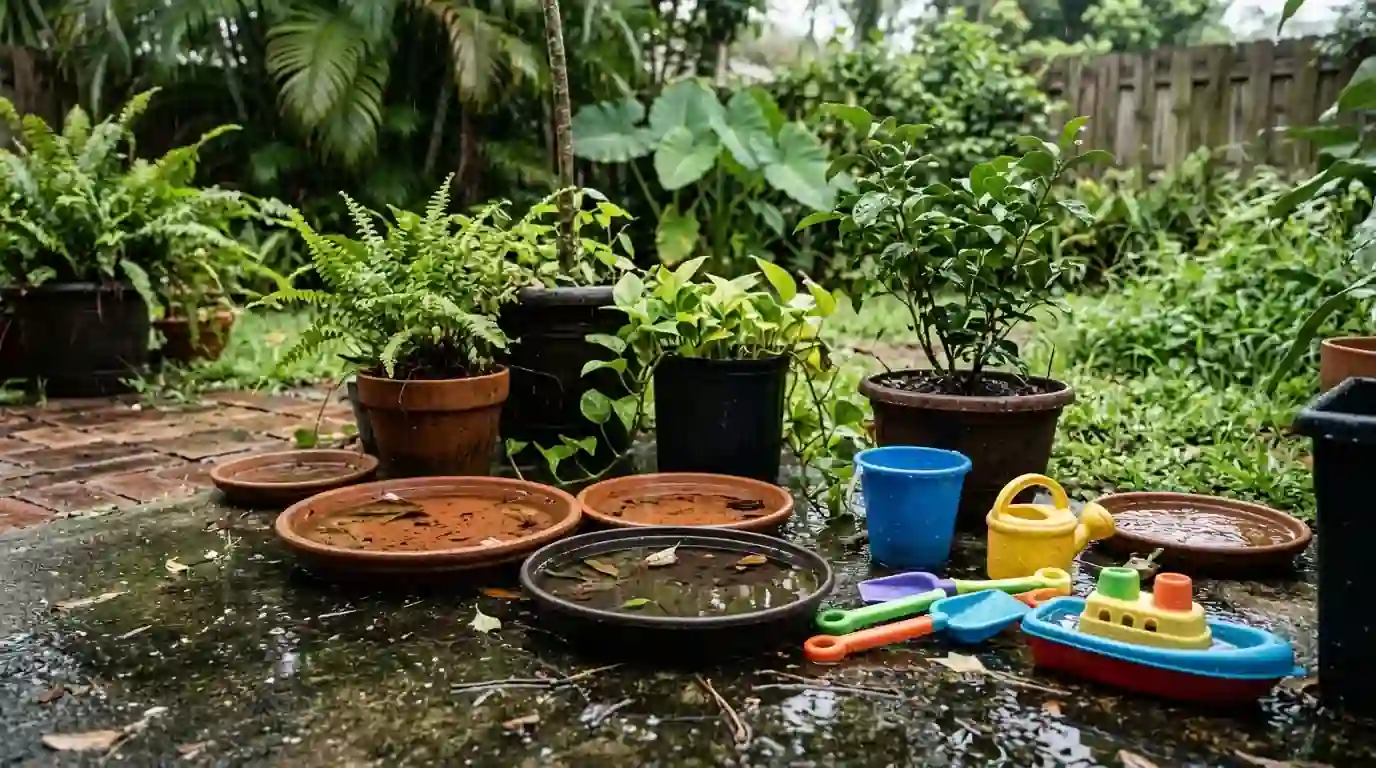
Aedes mosquitoes, the aggressive daytime biters common in Miami, lay eggs just above the waterline in small containers. The eggs can survive dry for months and hatch when rain fills the container. A week of afternoon storms can produce a new generation within about a week.
The checklist
- Tip out plant saucers, buckets, toys, wheelbarrows and pet bowls
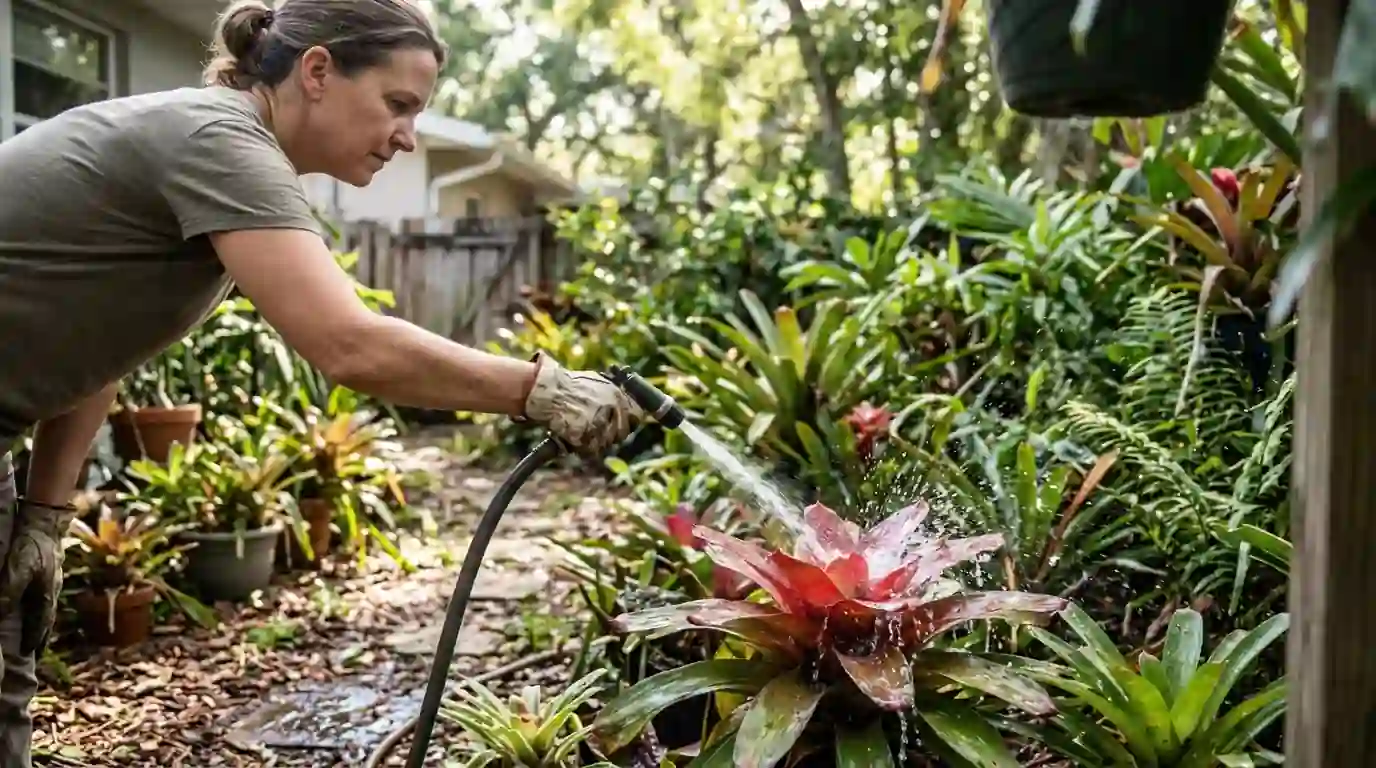
- Flush bromeliad cups with a hose or treat them
- Clear gutters and check that downspout extensions drain
- Pull tight or remove tarps on boats, grills and furniture
- Drill drain holes in tire swings and recycling bins
- Check AC condensate lines and drip pans
Protecting yourself in the meantime
Use an EPA-registered repellent when you are outside in shaded areas, wear light long sleeves at peak times and keep screens repaired. Ceiling and box fans on the patio help a lot, because mosquitoes are weak fliers. Check for standing water again after every storm, not just once a season.
When to call for treatment
If you have cleared the containers and are still getting bitten, especially near shaded foliage, a barrier treatment on the plants where adults rest and larvicide in water you cannot remove make a big difference. Monthly service through the rainy season keeps numbers down.
Field tip: Ask neighbors to do the same checklist. Aedes mosquitoes do not travel far, so a block-wide effort works far better than one yard alone.
Quick questions
Does Miami-Dade County spray for mosquitoes?
The county runs a mosquito control program for public areas, but private yards are up to owners.
Are mosquito treatments safe for pollinators?
Careful applicators avoid spraying open flowers and focus on shaded foliage.