
No-see-um control in Miami: what you are dealing with
No-see-ums, or biting midges, are barely visible but their bites itch for days. They breed in the wet mud of salt marshes, mangroves and tidal edges, and they are most active at dawn and dusk on calm days. Waterfront homes and anywhere near mangroves can be miserable in season.
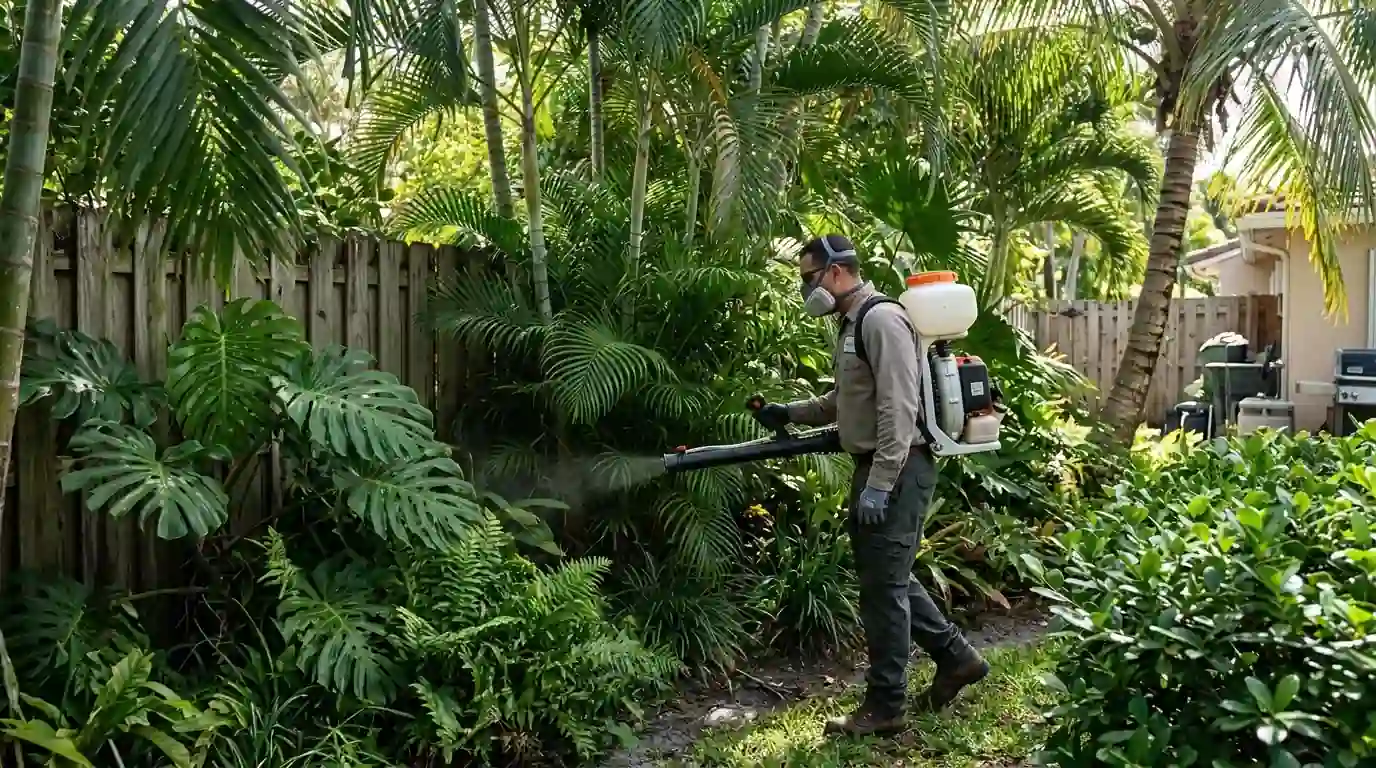
There is no way to treat the marsh, but we can reduce the numbers around your outdoor living areas by treating the foliage and screened areas where they rest, and we recommend practical changes: finer mesh on lanais and porches, ceiling fans, and keeping lights low at dusk.
Signs our technicians look for
Bites with nothing in sight
Itchy red welts after sitting outside at sunset.
Bites inside the screened porch
They slip through standard insect screen.
Worse on calm evenings
Wind keeps them down; still air brings them out.
Near water or mangroves
Homes on the bay, canals or near marsh edges.
How we handle no-see-um control
- 01
Assess the site
Breeding areas, wind exposure and where you spend time outdoors.
- 02
Treat resting areas
Shrubs, screened areas and under eaves where midges rest.
- 03
Screen and airflow advice
Mesh size, fans and lighting changes for porches and lanais.
- 04
Seasonal schedule
Repeat visits timed to the worst months.
What changes in Miami-Dade and Broward homes
No-see-ums are a waterfront problem in Miami. Homes along Biscayne Bay in Coconut Grove, Key Biscayne, North Miami and the Upper East Side, and canal homes near mangrove edges, get the most bites. Inland neighborhoods rarely see them.
A ceiling fan on high is one of the simplest fixes. These insects are weak fliers and steady airflow keeps them off you.
Before and after the visit
- Tell us when and where the bites happen.
- Check the mesh size on your porch or lanai screens.
- Trim dense shrubs close to outdoor seating.
What it typically costs
Questions about no-see-um control
Can no-see-ums be eliminated?
Not completely, because they breed in marshes and mangroves you cannot treat. Treatments and screens make outdoor areas much more comfortable.
Why do they get through my screens?
Standard screen mesh is too coarse. Finer mesh made for no-see-ums keeps most of them out.
When are they worst?
Around dawn and dusk on warm, calm days, especially near water.
Do no-see-ums carry disease here?
In South Florida they are mainly a biting nuisance. Talk to your doctor if bites become infected.
Where we do this work
Our technicians handle no-see-um control across Miami-Dade, Broward and Boca Raton. A few of the places we work most: