Why they are a problem
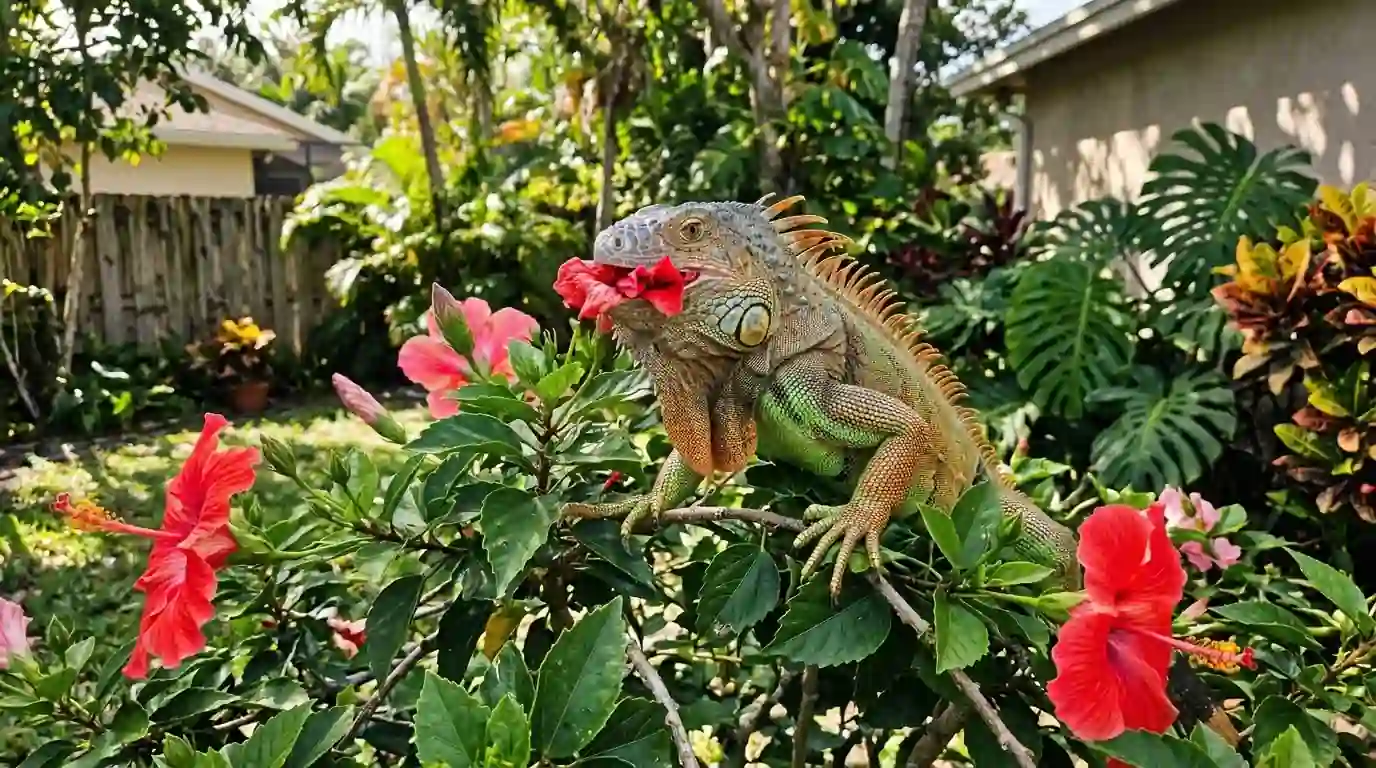
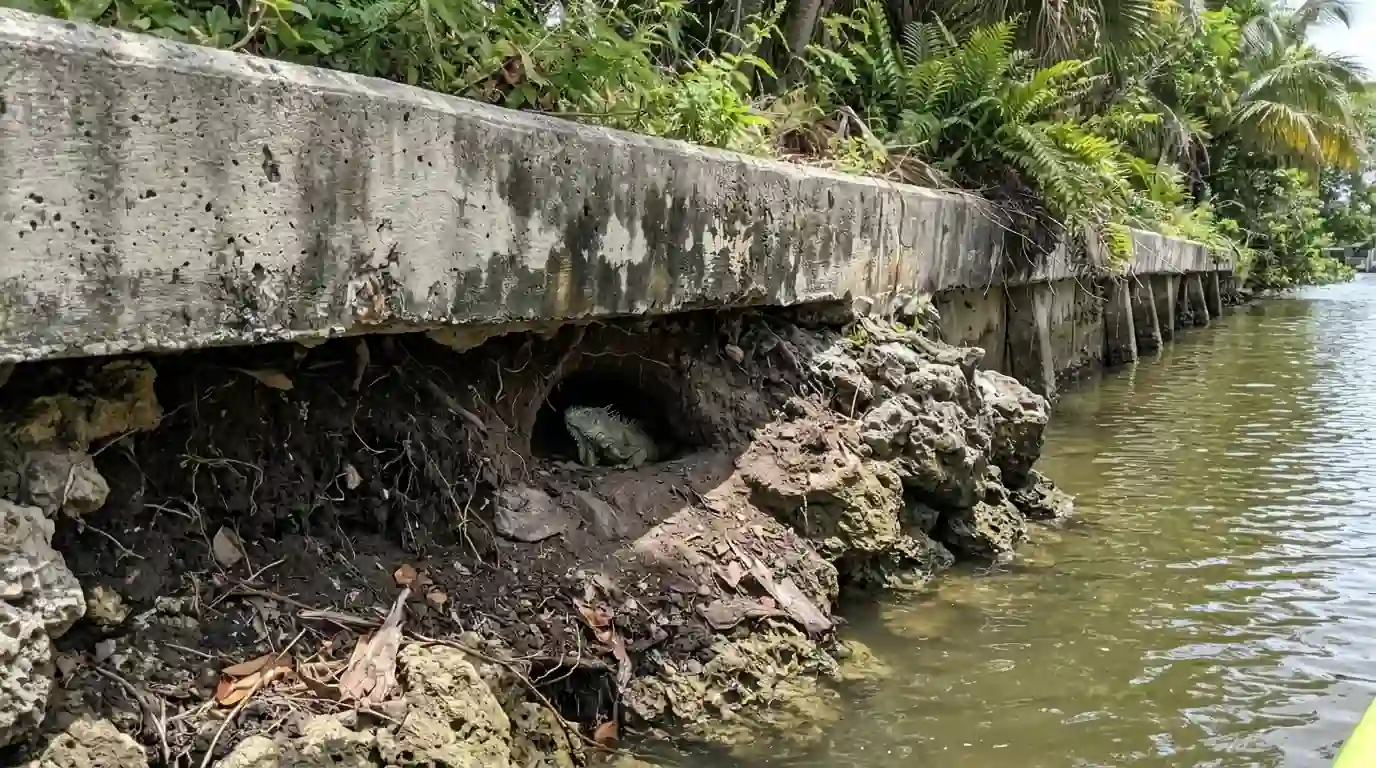
Green iguanas are an invasive species in Florida. They eat flowers, fruit and leaves, especially hibiscus, orchids and vegetable gardens. They dig burrows under sidewalks, slabs and seawalls, which can lead to erosion and collapse. And their droppings on pool decks, docks and inside pools are unpleasant and can carry bacteria.
Make the yard less inviting
- Replace their favorite plants near the water with species they eat less
- Remove fallen fruit and flowers
- Fill burrows after making sure they are empty
- Remove brush piles and cover gaps under decks and sheds
- Smooth sheet metal bands on trees and dock pilings can stop climbing
Removal and the rules
Green iguanas are not protected in Florida, and property owners can have them removed. The state wildlife agency sets rules on humane handling, so professional removal follows those rules. Removal works best combined with burrow filling and changes to the yard, because new iguanas move in from canals and neighboring lots.
Plants iguanas love and plants they skip
Iguanas favor hibiscus, orchids, roses, bougainvillea flowers, many vegetables and soft fruit. They tend to leave alone plants with tough or bitter leaves. If iguanas are constantly in one corner of your yard, look at what is growing there; moving their favorite plants away from the water's edge often shifts where they spend their day.
Cold snaps
During rare South Florida cold snaps, iguanas can become sluggish and fall from trees. They usually recover as the temperature rises. If you see many dropping from your trees, it is a sign of how many are living on your property.
Field tip: Do not handle iguanas yourself. Large adults have sharp claws, strong tails and can bite. Keep children and pets away and call for removal.
Quick questions
Will iguanas damage my seawall?
Yes, burrows behind the seawall cap can let soil wash out and lead to failure over time.
Do iguanas come back after removal?
They can move in from nearby water and yards. Deterrents and yard changes reduce how attractive your property is.