White-footed ant control in Miami: what you are dealing with
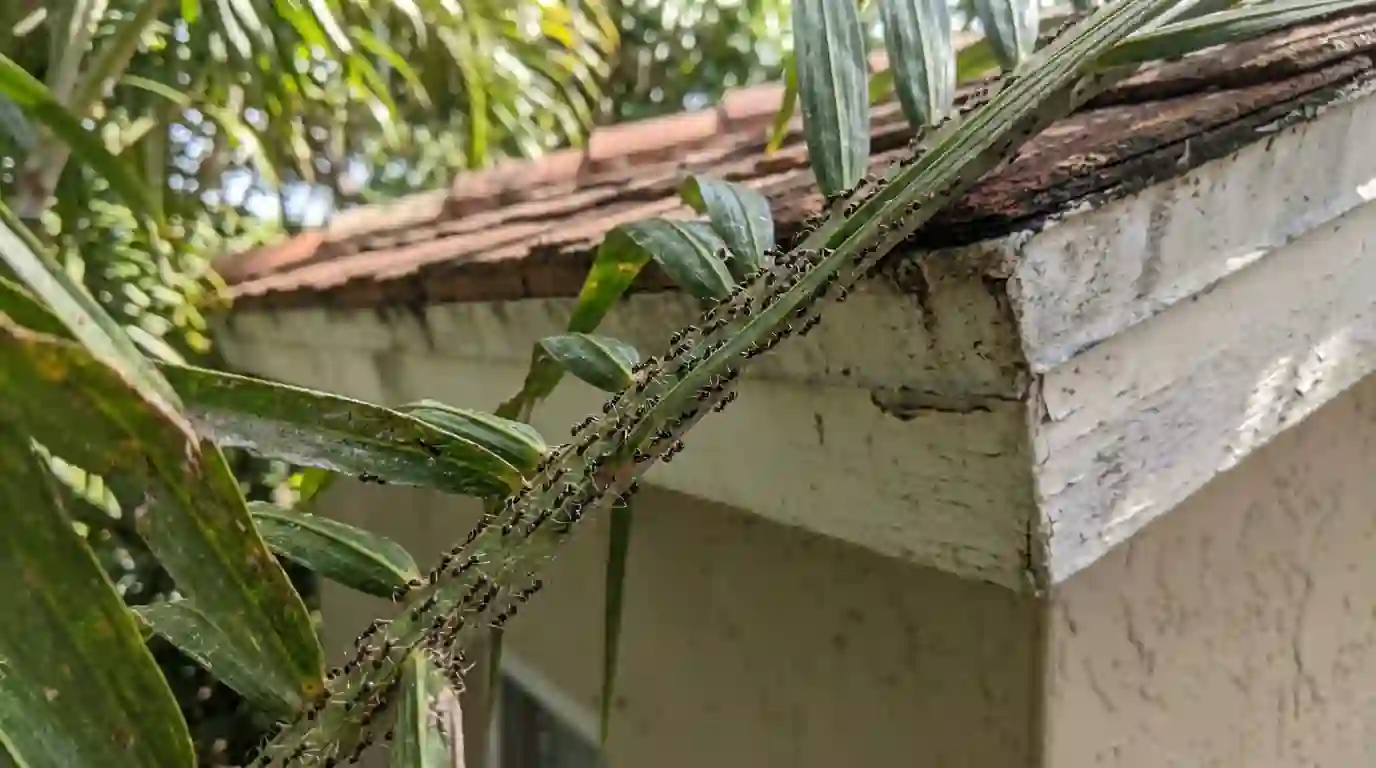
White-footed ants are one of the hardest pests in South Florida. Their colonies spread across a yard in many nests, under palm fronds, in leaf litter, under mulch, in tree hollows and sometimes in attics and wall voids. Workers forage along branches touching the roof, along utility lines and through tiny gaps around windows.
Because they do not pass liquid food mouth to mouth the way most ants do, ordinary baits spread slowly. Control means placing sweet bait stations around the yard and house, refreshing them for weeks, cutting back branches that bridge to the roof, and treating the perimeter with non-repellents. It works, but it takes patience.
Signs our technicians look for
Black ants with light-colored feet
Look closely; the tips of the legs are pale, almost white.
Trails along branches and wires
Workers travel along vegetation and cables to reach the roof.
Ants in the attic or soffits
Satellite nests in insulation and roof voids.
Huge numbers that never seem to drop
Spraying kills foragers but barely dents a colony of this size.
How we handle white-footed ant control
- 01
Map the nests
Trees, palms, mulch, attics and voids checked to find the main concentrations.
- 02
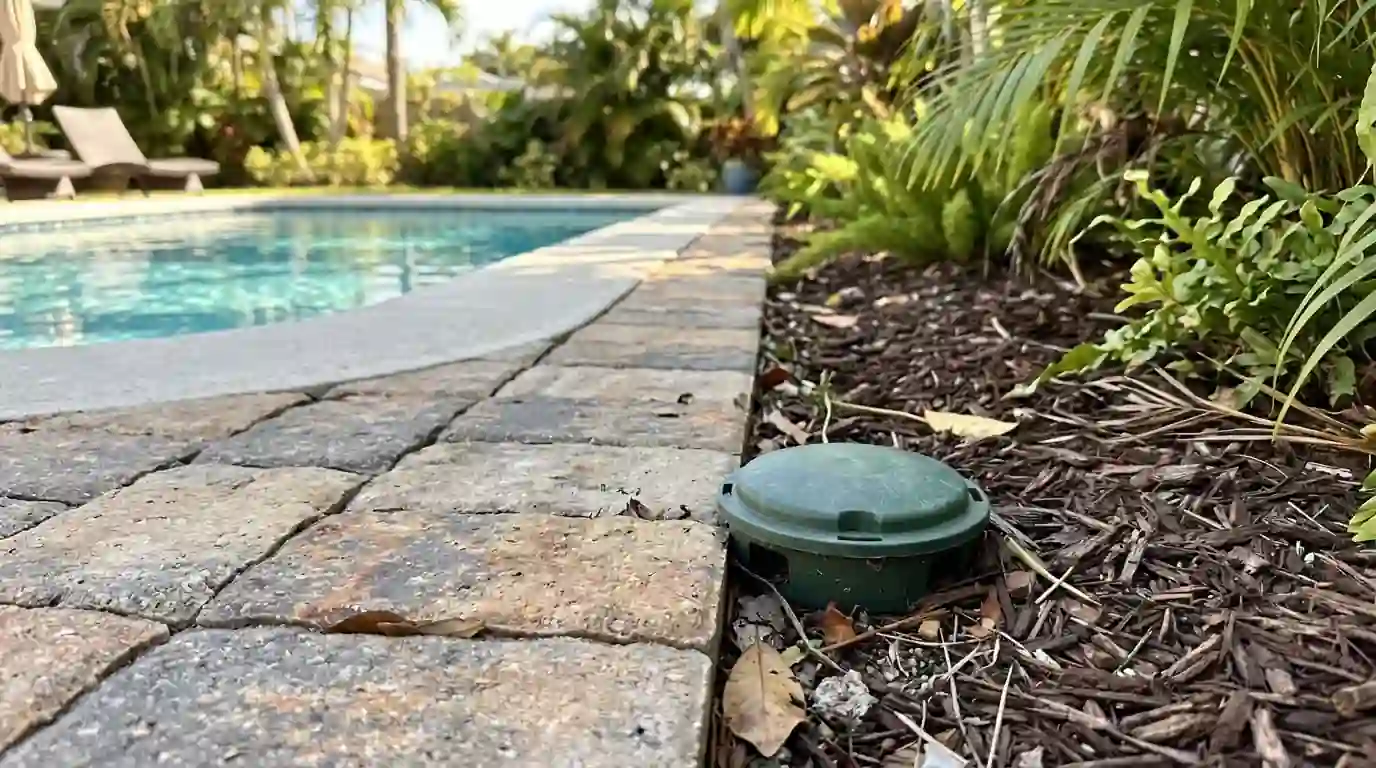
Sweet bait stations
Stations placed on trails around the yard and house and refreshed on schedule.
- 03
Cut the bridges
Branches, vines and palms touching the house trimmed back; utility entry points sealed.
- 04
Non-repellent perimeter
Exterior treatment along the foundation, eaves and entry points.
What changes in Miami-Dade and Broward homes
These ants are everywhere in older, tree-heavy neighborhoods: Coconut Grove, Coral Gables, the Upper East Side and Miami Shores. Homes surrounded by palms, ficus hedges and thick tropical planting can have several white-footed colonies on one lot.
Landscaping matters as much as product. A heavy layer of mulch and palm fronds left to rot at the base of trees gives them ideal nesting space. Your landscaper can be the biggest ally in this job.
Before and after the visit
- Trim branches and vines touching the roof and walls before or right after the first visit.
- Thin out mulch near the house and clear dead fronds.
- Avoid spraying; it scatters foragers away from the bait.
What it typically costs
Questions about white-footed ant control
How long does it take to control white-footed ants?
Expect noticeable improvement in four to eight weeks and continued maintenance after that, since neighboring yards keep supplying ants.
Why not just spray them?
Spray kills foragers but not the colony, and their colonies are huge. Bait and non-repellents reach far more of the colony.
Are white-footed ants dangerous?
They do not sting or damage wood. They are a nuisance pest that contaminates food and gets into everything.
Do I need to treat my attic?
If they are nesting there, yes. We check soffits and attic insulation during the first visit.
Where we do this work
Our technicians handle white-footed ant control across Miami-Dade, Broward and Boca Raton. A few of the places we work most: