Rodent exclusion and sealing in Miami: what you are dealing with
Exclusion is the part of rodent control that keeps the problem from coming back. After trapping removes the animals inside, sealing the entry points makes the house unavailable to the next ones looking for shelter. Most Miami homes have a mix of high gaps, like soffit returns and roof vents, and low gaps, like garage door corners and plumbing penetrations.
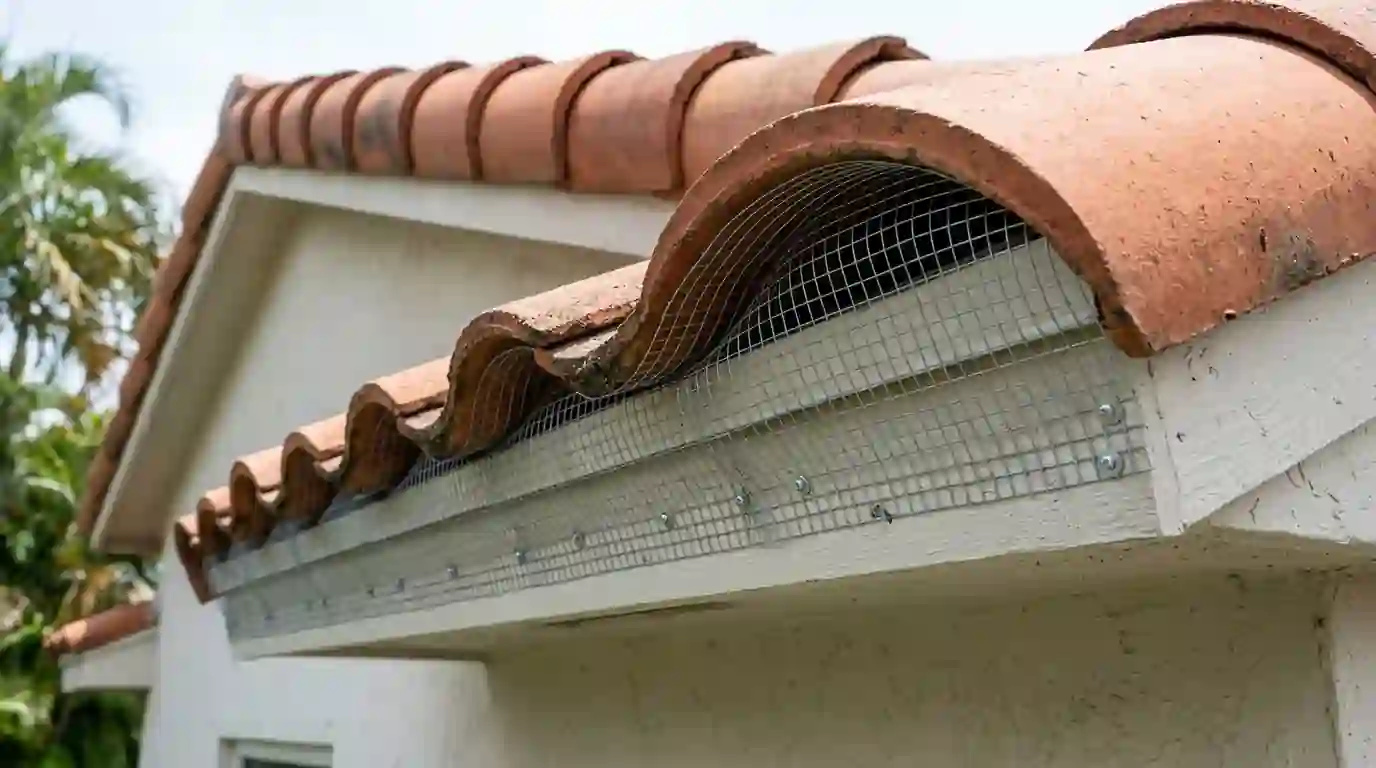
We document each opening, seal it with materials rodents cannot chew through, and photograph the work so you know what was done. Larger repairs, such as rotted fascia boards, are noted for a roofer or handyman so the seal does not fail later.
Signs our technicians look for
Rodents return after trapping
New activity weeks after the last catch means an opening is still open.
Daylight visible in the attic
Light coming through at the eaves or around vents shows a gap.
Chewed vent screens
Torn or chewed screens on gable and soffit vents.
Gaps under the garage door
Worn weather seals at the corners are a common rat entry.
How we handle rodent exclusion and sealing
- 01
Full gap survey
Roofline, vents, penetrations, garage, doors and slab edge inspected and listed.
- 02
Seal with chew-proof materials
Galvanized mesh, metal flashing, sweeps and rodent-resistant sealant.
- 03
Document the work
Photo record of every sealed opening.
- 04
Follow-up check
Return visit to confirm seals are holding and no new activity.
What changes in Miami-Dade and Broward homes
Miami construction has its own weak spots. Block homes often have gaps where the wood fascia meets the stucco, and barrel tile roofs leave openings at the eave ends that rats walk right into. Newer townhomes in Doral and Miramar tend to have AC line chases and dryer vents that were never sealed properly.
After hurricane repairs, check again. New roofs and soffits sometimes leave fresh gaps that crews did not close.
Before and after the visit
- Make sure we have access to every side of the house, including side yards.
- Clear stored items away from garage walls.
- Let us know about planned roof or soffit work so the timing lines up.
What it typically costs
Questions about rodent exclusion and sealing
Why not seal before trapping?
Sealing first can trap rodents inside the house. We trap first, then seal once activity drops, or seal in stages.
What materials do you use?
Galvanized hardware cloth, metal flashing, door sweeps and sealants made to resist chewing. Foam alone is not enough.
Is exclusion permanent?
Seals hold well, but new gaps can appear with roof work, storms or settling. An annual check catches them.
Can you seal a tile roof?
We close the eave ends and vent openings with materials designed for tile roofs.
Where we do this work
Our technicians handle rodent exclusion and sealing across Miami-Dade, Broward and Boca Raton. A few of the places we work most: