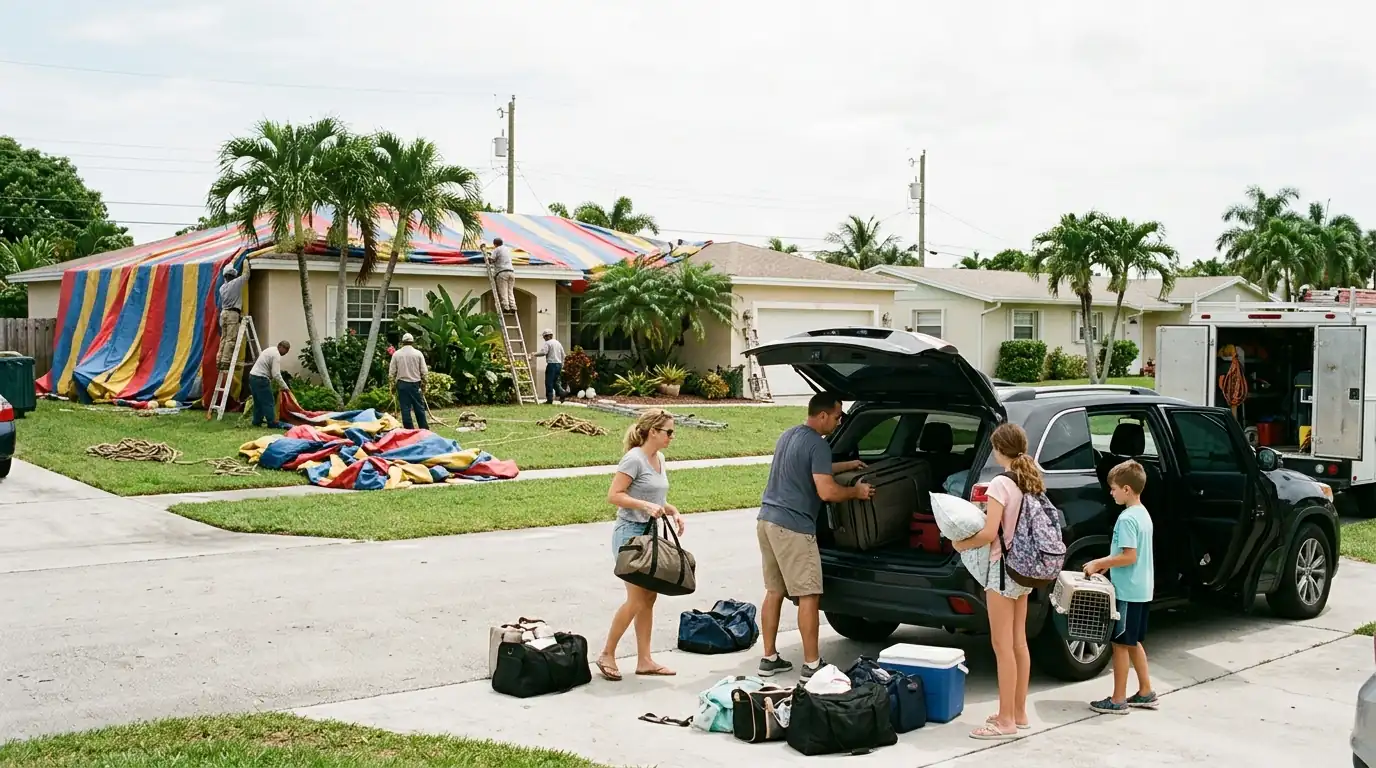
A week before
- Book a place to stay for two to three nights for everyone, including pets, birds and fish
- Tell the HOA or neighbors on shared walls; attached homes are usually tented together
- Plan meals around emptying the fridge and pantry
- Ask the fumigator about gas service shutoff and relight timing
The fumigant used for drywood termites penetrates wood, fabric and food packaging, so anything you eat, drink or take as medicine needs to be removed or sealed in the special bags your fumigator provides. Unopened cans and glass jars with factory seals are usually fine. Open bags of rice, cereal, coffee and snacks are not.
Two days before
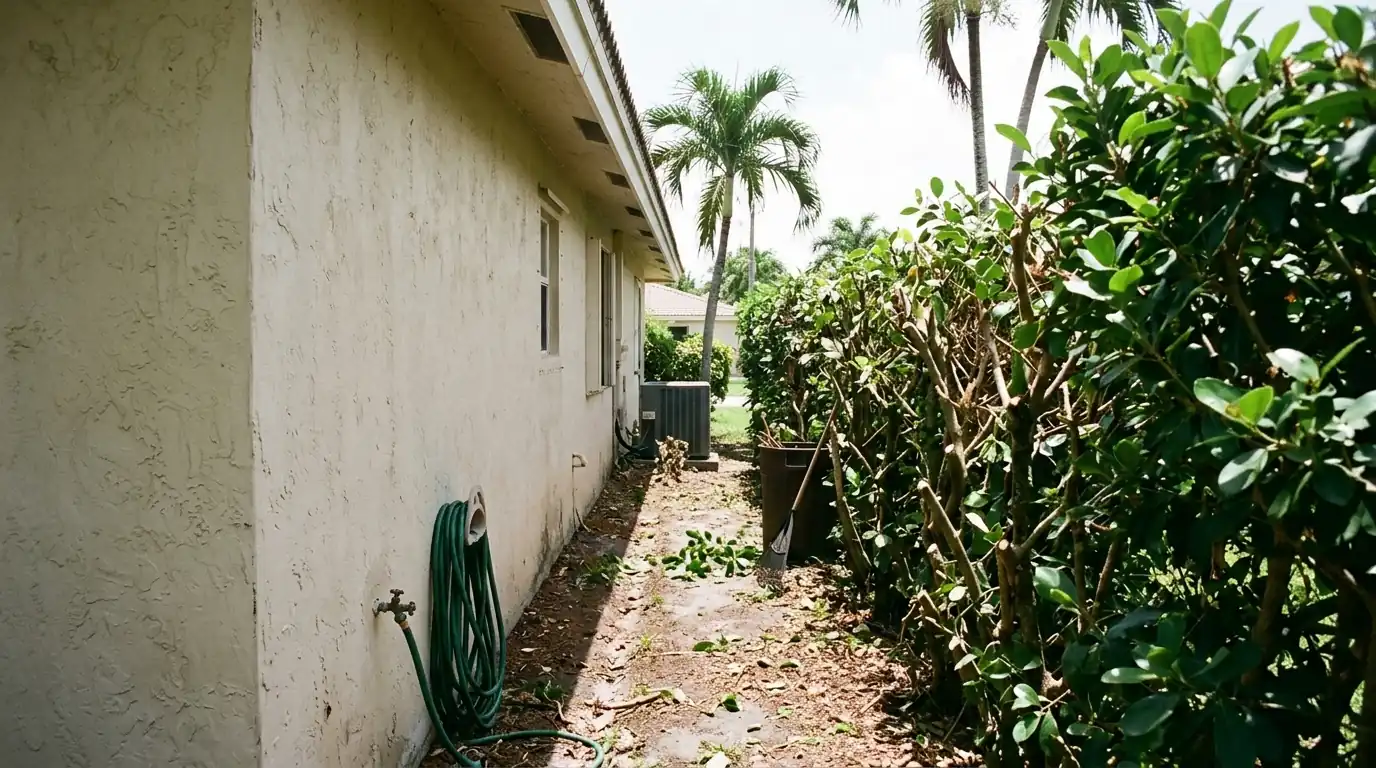
- Trim shrubs and hedges back from the walls so the tarps can sit at the ground line
- Water the planting beds along the house deeply; moist soil helps hold the seal and protects roots
- Move outdoor furniture, grills and potted plants away from the walls
- Collect keys for every door, gate, shed and lockbox
The morning of
- Remove people, pets and houseplants
- Open every interior door, cabinet, drawer and closet
- Turn off and unplug heat sources and anything that cycles on
- Leave windows closed and blinds open; crews check every room before sealing
The crew walks the house to confirm it is empty, then covers it with tarps, seals the bottom edges, posts warning signs and releases the fumigant. The house is locked with secondary locks so nobody can enter by mistake.
Things people forget
- Medicine in nightstands, purses and travel bags
- Food in the garage fridge or a chest freezer
- Fish tanks and plants on the lanai
- Mattresses and pillows still sealed in plastic, which should be opened or removed
- Spare keys to sheds, side gates and the electric panel
Walk through the house the night before with the prep list in hand. Most last-minute delays come from a locked room or a forgotten bag of groceries.
Re-entry day
After the exposure period, tarps come off and the house is aerated. The fumigator tests the air inside with a monitoring device and only clears the home once readings meet the required level. You get a posted notice that stays with the house as a record of the treatment.
Field tip: Keep the treatment notice and paperwork. When you sell, buyers and WDO inspectors will look for evidence of previous treatment, and good records answer their questions quickly.
Quick questions
Do I need to wash dishes and clothes after tenting?
No. The fumigant is a gas that airs out and leaves no residue on surfaces, dishes or clothing.
Can I leave my car in the garage?
Cars are usually moved out because the garage is part of the structure being treated. Ask your fumigator.