Termite tenting and fumigation in Miami: what you are dealing with
Drywood termites do not need soil. A colony can live in a single window frame, and a house can have a dozen colonies that have never touched each other. Spot treatments work when activity is limited and reachable, but when pellets are showing up in several rooms, the attic and the furniture, fumigation is the treatment that gets them all.
Tenting is mostly logistics. We give you a printed prep list, coordinate the gas service shutoff, bag or remove food and medicine, seal the structure under tarps, release the fumigant, and then aerate and test the air before anyone is let back in. You get a clear schedule for each step so you can plan where to stay.
Signs our technicians look for
Pellets in more than two rooms
Frass in the bedroom, the kitchen and the garage at once usually means several colonies, which is when tenting makes more sense than drilling.
Activity in places you cannot reach
Colonies inside roof framing, wall studs or built-in cabinetry are out of reach for spot work.
Swarms inside the house
Drywood swarmers flying around lights indoors, often on spring and summer evenings, mean mature colonies inside the structure.
Infested furniture you want to keep
Antique wood furniture and cabinets can be treated in place during the fumigation instead of being thrown out.
How we handle termite tenting and fumigation
- 01
Inspection and quote
We confirm drywood termites, measure the structure and price it by volume, then hand you the prep list.
- 02
Prep and gas shutoff
Food, medicine and plants come out or go into special bags, and we arrange the gas service shutoff and relight.
- 03
Tarps and fumigation
The structure is sealed, warning signs are posted, the fumigant is released and the house is secured overnight.
- 04
Aeration and clearance
Tarps come off, the house airs out and we take clearance readings. You get the all-clear and the posted notice for your records.
What changes in Miami-Dade and Broward homes
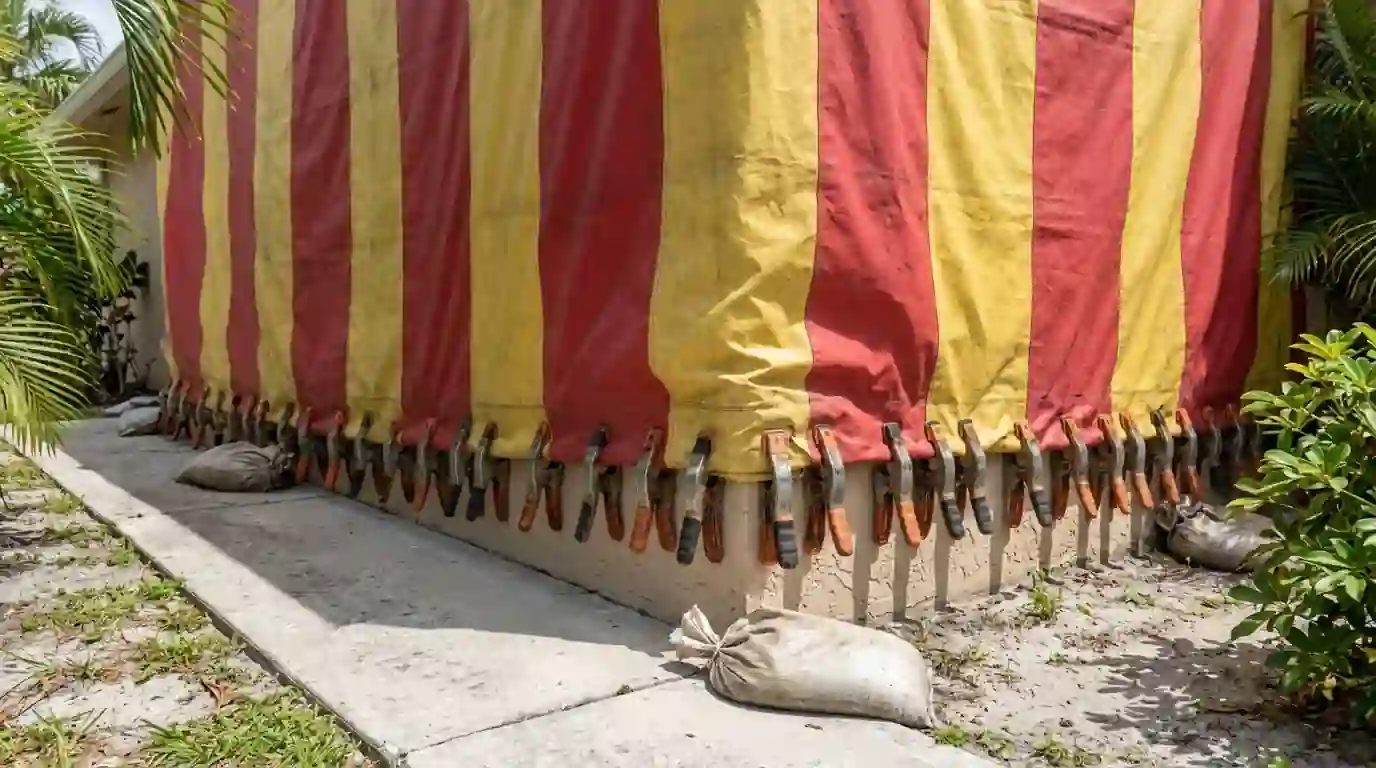
Tenting is part of life in Miami. The striped tarps you see in Little Havana, Coral Gables and Miami Springs are almost always drywood work, because the West Indian drywood termite thrives in our humid coastal air and older wood framing. Townhomes and attached villas take more planning, since the whole building under one roof usually has to be tented together.
Plants and landscaping get attention too. Shrubs and hedges pressed against the walls can be damaged where the tarps sit, so we ask you to trim back anything touching the house and water the beds well the day before. Pools stay uncovered but nobody swims until the job is cleared.
Before and after the visit
- Plan two to three nights away for people and pets, including fish tanks and birds.
- Bag or remove food, medicine and anything open that you eat or drink, using the bags we supply.
- Open every interior door, drawer and cabinet so the gas moves evenly.
- Trim plants back from the walls and water the beds the day before the tarps go on.
- Leave keys for every lock, including sheds and side gates.
What it typically costs
Questions about termite tenting and fumigation
How long will we be out of the house?
Most Miami homes are cleared to re-enter after two to three nights. The exact timing depends on the size of the house, the weather and the clearance readings.
Does tenting kill subterranean termites too?
No. Fumigation targets termites inside the structure's wood. Subterranean termites live in the soil and need a soil treatment or bait system, which we can quote at the same time.
Do I have to throw away food after tenting?
Not if it is sealed or bagged properly. Unopened cans and bottles, and anything sealed in the fumigation bags we supply, are fine. Open food that was not bagged should be thrown out.
Will tenting damage my roof or plants?
Crews take care on tile and shingle roofs, and the prep list covers plants. A few delicate tiles can crack on older roofs; we point out fragile spots before the tarps go on.
Where we do this work
Our technicians handle termite tenting and fumigation across Miami-Dade, Broward and Boca Raton. A few of the places we work most: