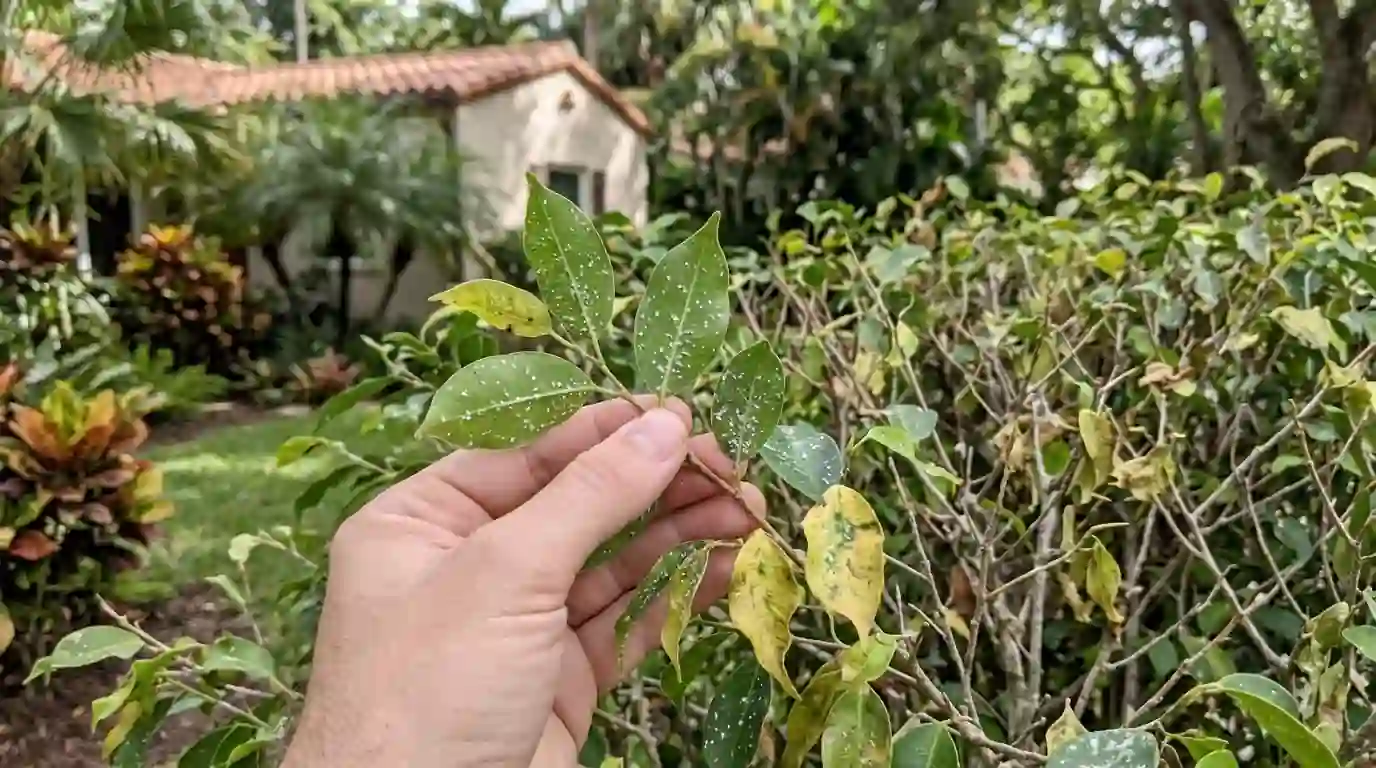
Whitefly control in Miami: what you are dealing with
Ficus whitefly can strip a tall ficus hedge bare in a few weeks, and rugose spiraling whitefly coats leaves with white waxy spirals and honeydew that drips on cars, pool decks and patio furniture. The honeydew grows black sooty mold, which is how many people notice the problem first.
We identify which whitefly you have, treat hedges and trees with systemic products that move through the plant, and add foliar treatments when populations are high. Timing and plant size decide the method, and we keep treatments away from blooming plants to protect pollinators.
Signs our technicians look for
Ficus hedge losing leaves
Sudden leaf drop and thinning, starting from the inside.
White spirals on leaf undersides
Waxy spiral patterns left by rugose spiraling whitefly.
Sticky residue on cars and decks
Honeydew dripping from trees and hedges.
Black sooty mold
Black coating on leaves, walls and furniture under infested plants.
How we handle whitefly control
- 01
Identify the whitefly
Ficus or rugose spiraling whitefly, and which plants are affected.
- 02
Systemic treatment
Soil or trunk treatment that moves through the plant.
- 03
Foliar knockdown
Targeted sprays when populations are heavy.
- 04
Monitor and repeat
Checks on a schedule, since new whitefly flies in from nearby.
What changes in Miami-Dade and Broward homes
Ficus hedges are everywhere in Miami: Coral Gables, Pinecrest, Coconut Grove and Miami Beach use them as privacy walls, and they have been under whitefly pressure since the pest arrived in Miami-Dade in the late 2000s. Gumbo limbo, black olive and coconut palms host rugose spiraling whitefly across the county.
Because whitefly moves between neighbors' plants, a hedge that is treated while the one next door is not will need ongoing care. We schedule accordingly.
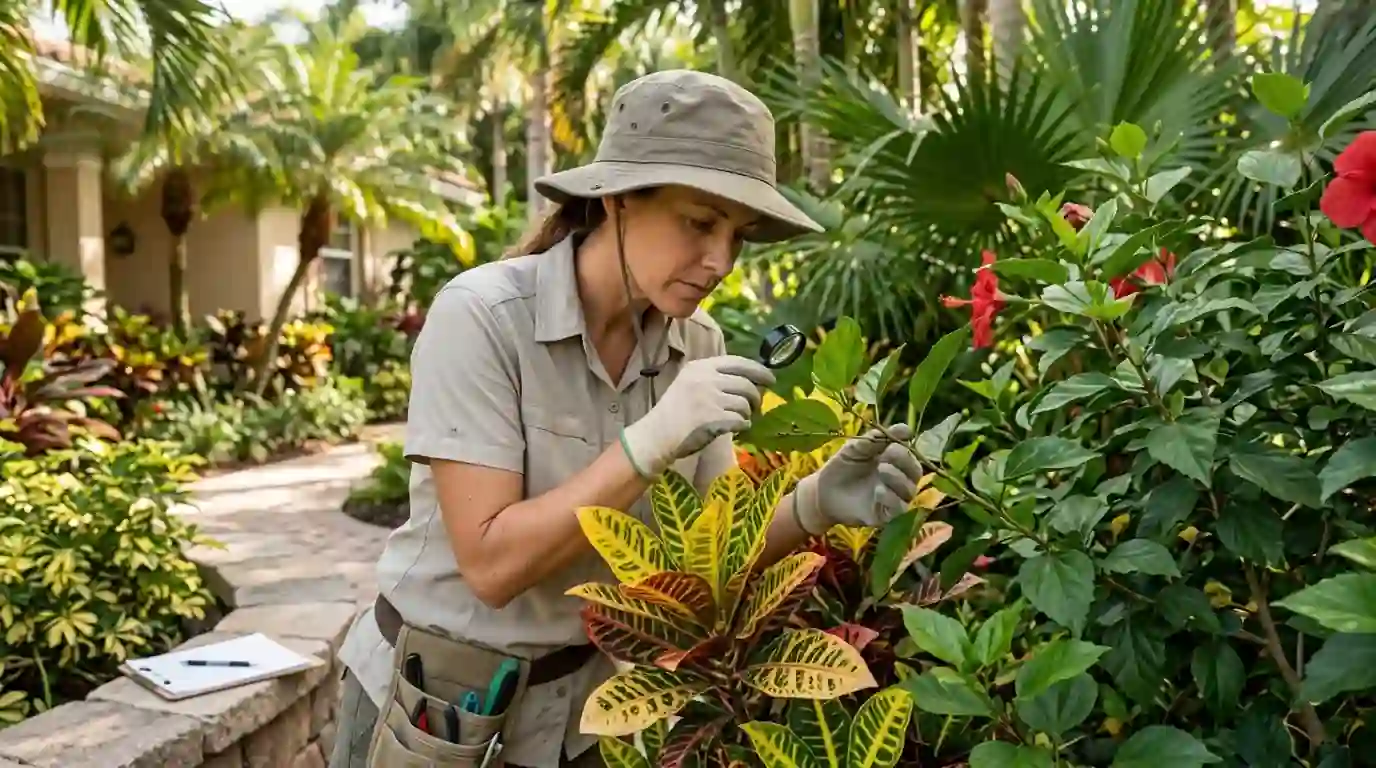
Before and after the visit
- Point out which hedges and trees are affected.
- Tell us your landscaper's trimming schedule.
- Move cars from under heavily dripping trees.
What it typically costs
Questions about whitefly control
Will my ficus hedge grow back?
Healthy hedges usually leaf out again once whitefly is controlled, though it can take a few months.
How do I clean sooty mold?
Once whitefly is controlled, sooty mold weathers off plants over time. Hard surfaces can be washed with soapy water.
Is the treatment safe for bees?
We avoid spraying blooming plants and use systemic methods where possible to protect pollinators.
How often do hedges need treatment?
Most hedges need treatment two to four times a year, depending on pressure from nearby plants.
Where we do this work
Our technicians handle whitefly control across Miami-Dade, Broward and Boca Raton. A few of the places we work most: