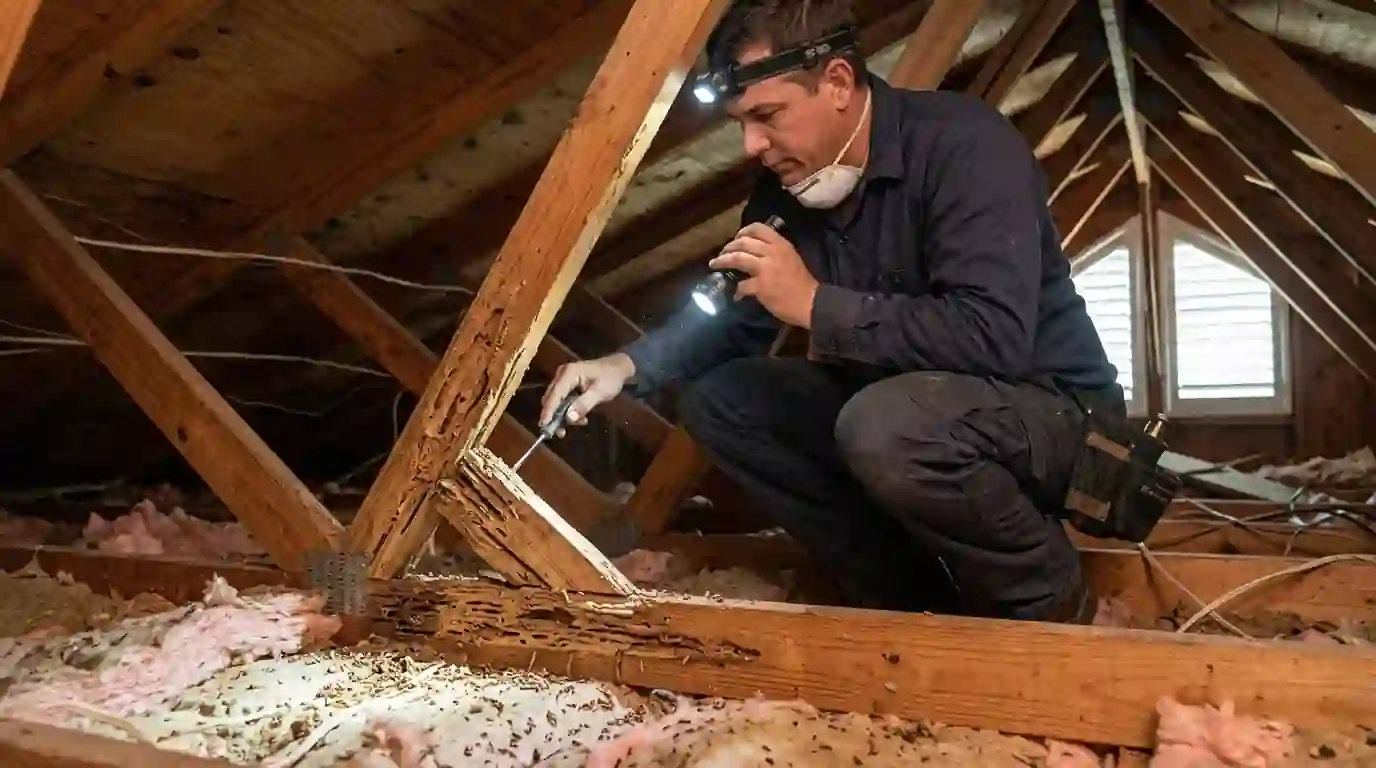
Termite bait station systems in Miami: what you are dealing with
Baiting is the no-trench, no-drill way to manage subterranean, Formosan and Asian termites. Stations go into the soil around the house, each holding a cellulose bait with a slow-acting growth regulator. Foragers eat it, return to the colony and pass it along, and because termites need to molt to grow, the colony declines over weeks to months.
It is a program rather than a one-time job. Stations have to be inspected on a schedule, bait has to be replaced when it is eaten, and new stations sometimes need to go in where activity shows up. We give you a station map and a record of every visit.
Signs our technicians look for
You want protection without drilling
Homes with expensive pavers, stone patios or finished floors along the walls are good candidates for baiting.
Termites keep returning to the neighborhood
Areas with mature trees and older homes have colonies in yards and stumps that bait can intercept.
Past liquid treatment is aging
Bait can take over long-term protection after an older soil treatment.
You prefer less product in the soil
Baiting uses a small amount of active ingredient placed only inside stations.
How we handle termite bait station systems
- 01
Plan the layout
We map the house, note conducive conditions and mark station spots every 10 to 20 feet.
- 02
Install stations
Stations go into soil around the perimeter, with extras near known activity or moisture.
- 03
Monitor on schedule
Each station is opened and checked; bait eaten is replaced and activity is logged.
- 04
Adjust the plan
Stations are added where termites appear and you get a written record after each visit.
What changes in Miami-Dade and Broward homes
Baiting suits a lot of Miami properties. Coral Gables and Pinecrest homes with large lots and old trees, and Doral townhomes surrounded by pavers, are both easier to protect with stations than with trenching. In rocky areas of south Miami-Dade where the limestone sits close to the surface, we use a core drill to set stations properly.
Lawn crews are the main threat to stations. Mowers and edgers clip the caps, so we flag stations and ask you to let your landscaper know where they are.
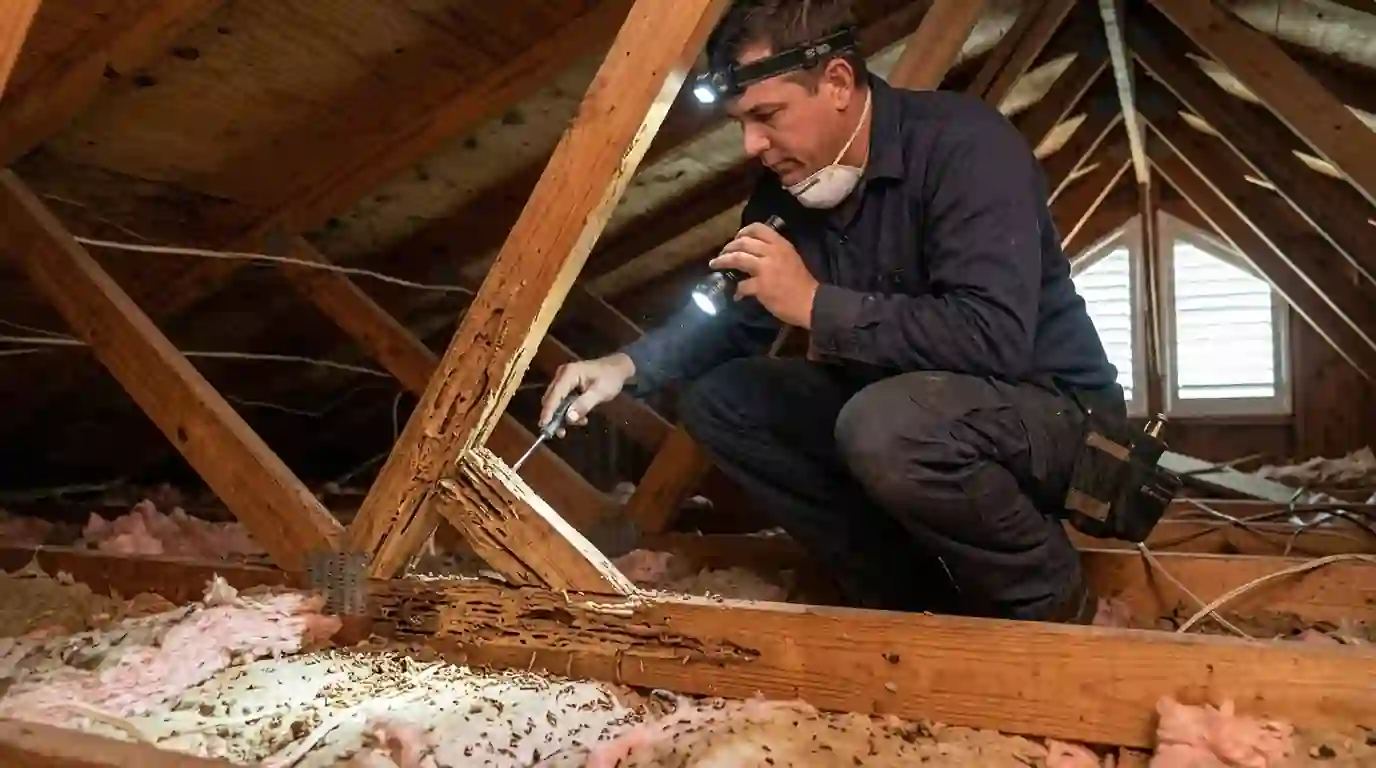
Before and after the visit
- Mark sprinkler heads and buried lines you know about.
- Tell your landscaper where the stations are once they are in.
- Keep mulch thin near the stations so we can find the caps.
What it typically costs
Questions about termite bait station systems
How long does it take baits to work?
It depends on when termites find the stations. Once feeding starts, colonies typically decline over a few months. Liquid soil treatment is faster if you have active damage right now.
Can I combine bait with a liquid treatment?
Yes. Some homes get liquid treatment where activity is happening and stations around the rest of the perimeter for long-term interception.
Do bait stations attract termites to my house?
No. Termites are already foraging through the soil. Stations intercept them before they reach the structure.
What if a station gets damaged?
Tell us and we replace it on the next visit or sooner if it is near known activity.
Where we do this work
Our technicians handle termite bait station systems across Miami-Dade, Broward and Boca Raton. A few of the places we work most: