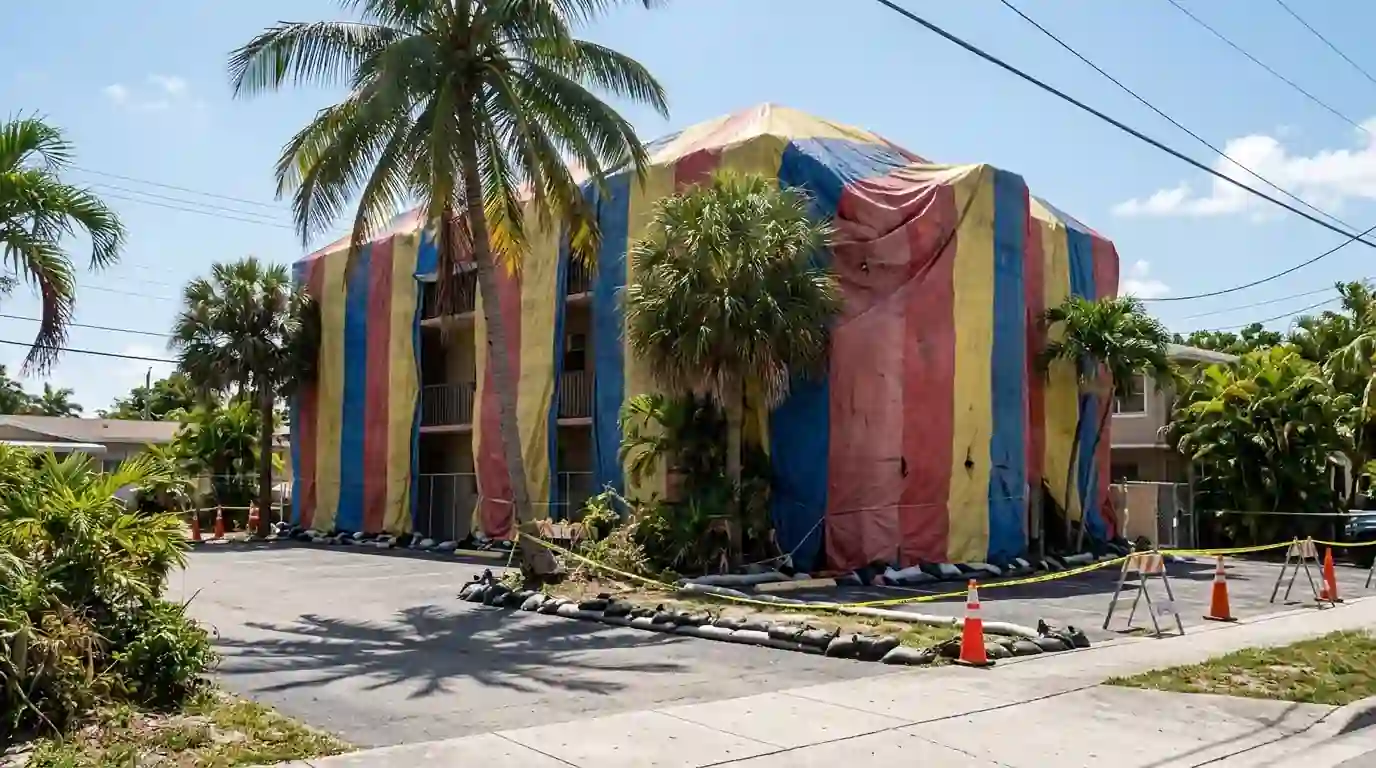
Low-rise buildings can be tented
Garden-style condos, townhome rows and small low-rise buildings can be fumigated as a whole, the same way a house is. It takes more planning: every unit has to be emptied at the same time, every owner and tenant needs the prep list, and the association usually coordinates the date, the gas shutoff and access to locked units.
Because one unit cannot be tented on its own when it shares a roof and walls with others, the decision is usually made at the building level.
High-rise towers cannot
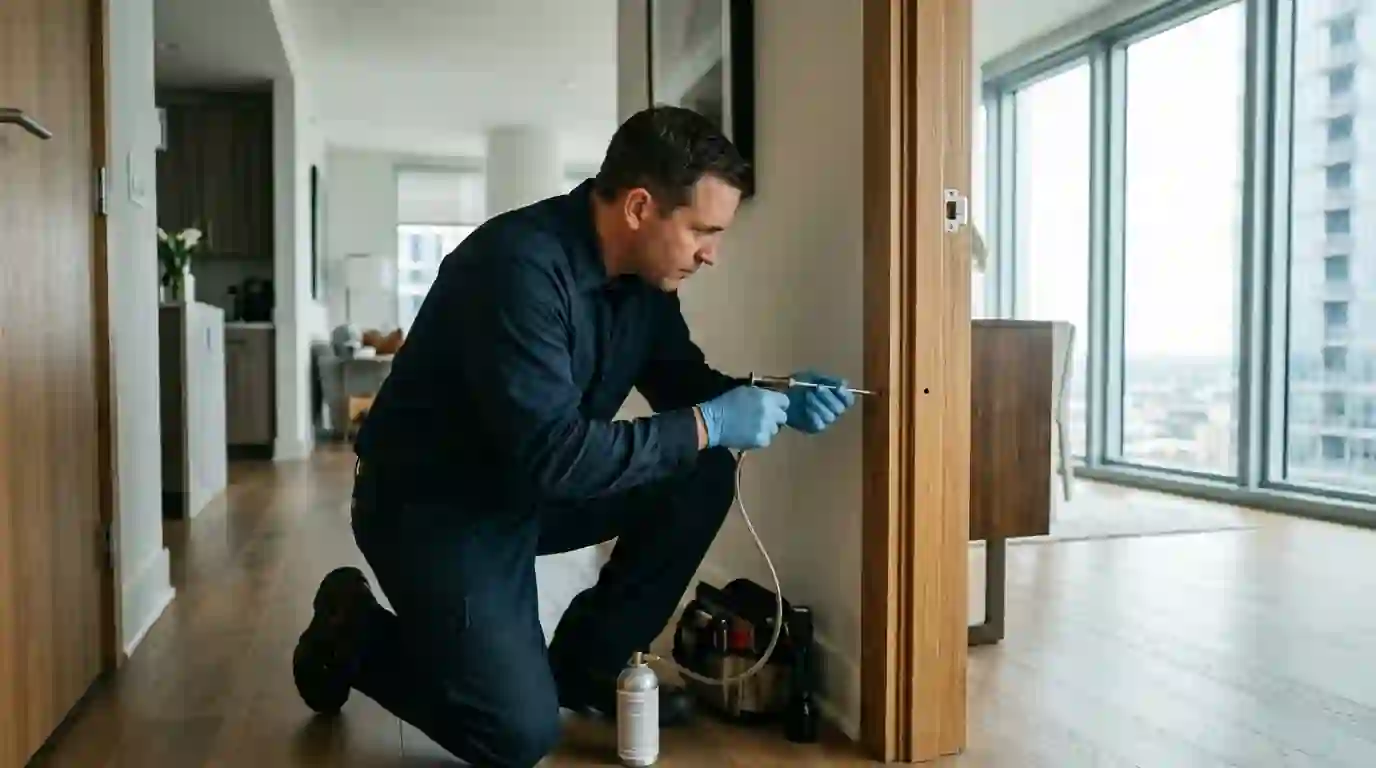
Concrete towers in Brickell, Edgewater or Aventura are not tented. Drywood activity there usually lives in wood elements inside units: door frames, cabinets, window trim and furniture. Those are handled with local treatments such as drill-and-inject spot work, and infested furniture can sometimes be treated separately.
Who pays
Your declaration and bylaws decide whether termite treatment of a given area is an association or owner expense. Many associations treat work on common elements and building structure as an association cost, while items inside a unit, such as cabinets or furniture, fall on the owner. Ask your manager before booking anything that affects shared walls or the roof.
Preparing a building for tenting
When a low-rise association decides to tent, the hardest part is coordination: confirming every unit is empty, collecting keys, arranging the gas shutoff and making sure pets and plants are out. A single shared prep list and one contact person for the building keep the date from slipping.
What an owner can do now
- Leave the pellets in place and photograph them
- Report the activity to management in writing
- Book an inspection of your unit to confirm the termite type
- Ask whether neighbors have reported similar activity
Quick questions
Can I tent only my townhome if it shares a roof?
Usually not. Attached units under one roof are tented together, which needs the association and every owner on board.
Is spot treatment enough in a high-rise unit?
When activity is limited to reachable wood like a door frame or cabinet, spot treatment is the normal approach in towers.