Termite inspection in Miami: what you are dealing with
South Florida has two very different termite problems living side by side. Drywood termites live inside the wood they eat and push out tiny pellets, while subterranean and Formosan termites travel from the soil through mud tubes and can hollow out framing without leaving anything on the floor. An inspection has to look for both, because the treatment for one does nothing for the other.
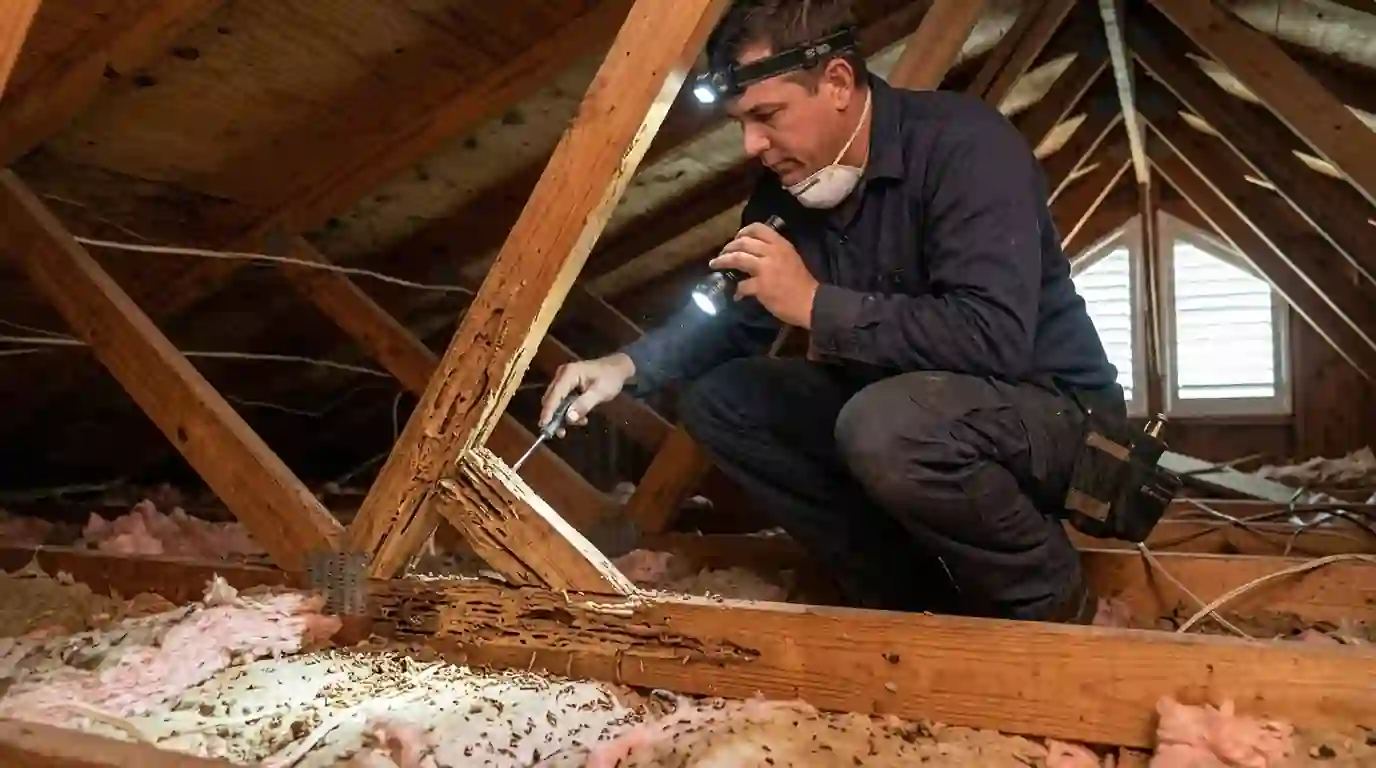
Our technicians start in the attic and garage, where drywood colonies in rafters and fascia show up first, then work through every room checking window sills, door casings, baseboards and built-in cabinets. Outside we walk the foundation looking for mud tubes, wood-to-soil contact, mulch piled against stucco and irrigation keeping the slab edge wet.
Signs our technicians look for
Pellets under a window or door frame
Small, six-sided pellets that look like coarse sand or ground pepper. They collect in little piles below a kick-out hole and keep coming back after you sweep.
Wings on the sill after a warm evening
Swarmers shed their wings within minutes. A drift of identical wings on a sill or in a light fixture is a colony announcing itself.
Mud tubes on stucco or the garage slab
Pencil-width tunnels of soil climbing a wall, a pipe or the edge of the slab. Break one open; if it is rebuilt, the colony is active.
Baseboards or trim that sound hollow
Tap with a screwdriver handle. Termite-eaten wood sounds papery and can crush under light pressure while the paint stays intact.
How we handle termite inspection
- 01
Attic and garage first
Rafters, sheathing, fascia backs and garage door frames, where drywood colonies in Miami homes most often start.
- 02
Room by room inside
Every window, door casing, baseboard run and cabinet base, with a moisture meter on anything that looks or sounds wrong.
- 03
Foundation walk outside
Slab edge, expansion joints, plumbing penetrations, planters and any wood touching soil, checked for tubes and moisture.
- 04
Written finding
Termite type, active or old, where it is, and the treatment options in plain language with prices before you decide.
What changes in Miami-Dade and Broward homes
Miami housing makes inspections tricky in specific ways. The 1940s and 1950s block homes in Shenandoah, Flagami and Little Havana usually have wood roof framing and wood window bucks set into concrete, and those bucks are a favorite drywood target. Newer townhomes in Doral and Kendall often hide the slab edge behind pavers and landscape rock, which is where subterranean tubes like to start.
Condos need their own approach. In a high-rise in Brickell or Edgewater the risk is mostly drywood termites in cabinets, door frames and furniture brought in from elsewhere, so we focus inside the unit and note anything that points to a building-wide issue the association should know about.
Before and after the visit
- Clear a path to the attic hatch and pull stored boxes away from the garage walls.
- Leave pellets or wings where you found them if you can; they tell us more than a photo.
- Have HOA or condo contact details handy if you live in a shared building.
- Point out any past treatment records or old warranty paperwork you have.
What it typically costs
Questions about termite inspection
How often should a Miami home have a termite inspection?
Once a year is a sensible rhythm for most homes here, because both drywood and subterranean termites are active all year. Book sooner if you see wings, pellets or mud tubes.
Can you tell drywood and subterranean termites apart on the spot?
Usually yes. Drywood termites leave dry pellets and live in the wood itself, while subterranean termites bring soil with them and build mud tubes. When the evidence is old or mixed, we say so in the written finding.
Do I need to be home for the inspection?
Someone needs to let us in and give access to the attic, garage and any locked rooms. Many owners stay for the walkthrough so we can show them what we found.
Is this the same as a WDO inspection for a home sale?
No. A WDO inspection is a formal report on the state form used in Florida real estate deals. A regular inspection is for homeowners who want answers; we can do either.
Where we do this work
Our technicians handle termite inspection across Miami-Dade, Broward and Boca Raton. A few of the places we work most: