Bed bug treatment in Miami: what you are dealing with
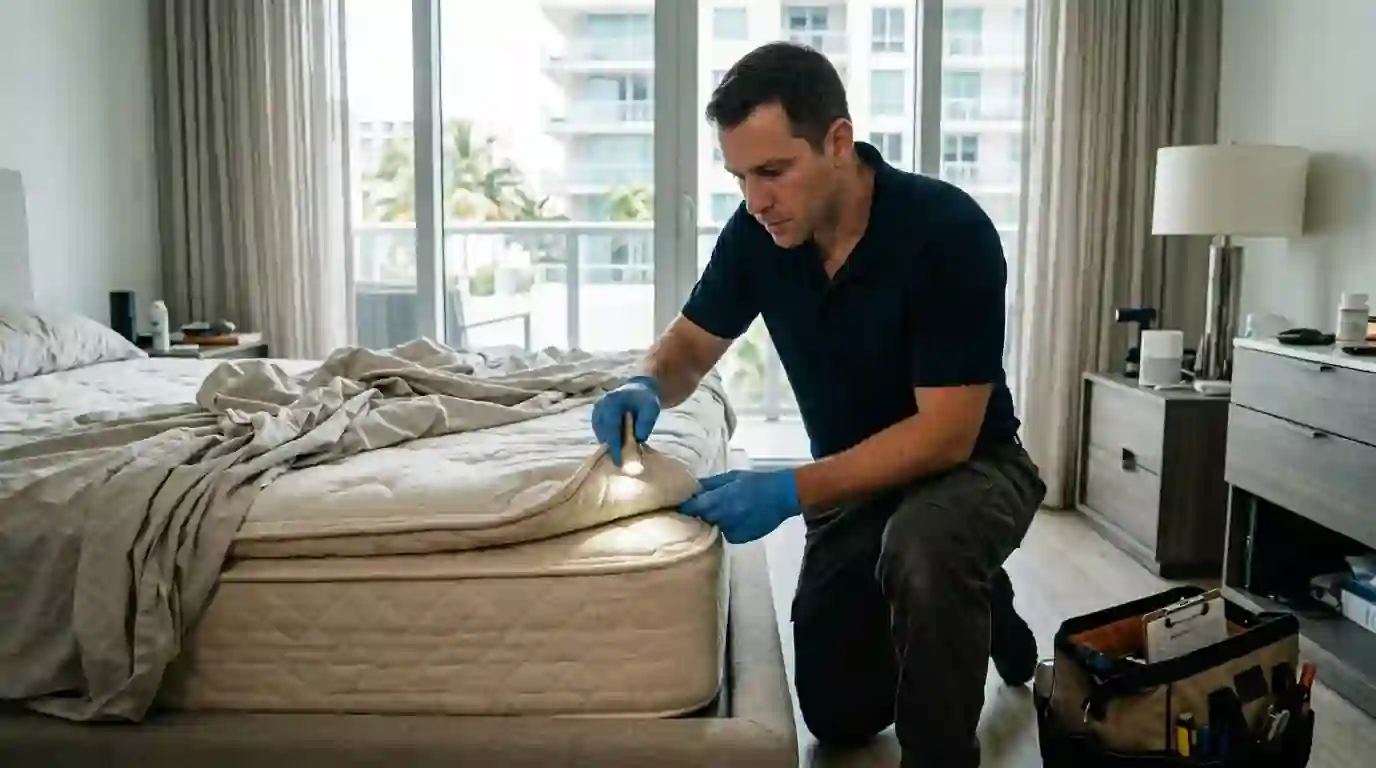
Bed bugs hide in mattress seams, box springs, headboard joints, nightstands, couch cushions and baseboard cracks, and they come out at night to feed. They travel in luggage, used furniture and between units in shared buildings. Bites alone do not confirm bed bugs, so we look for the bugs, their shed skins, eggs and the dark spotting they leave behind.
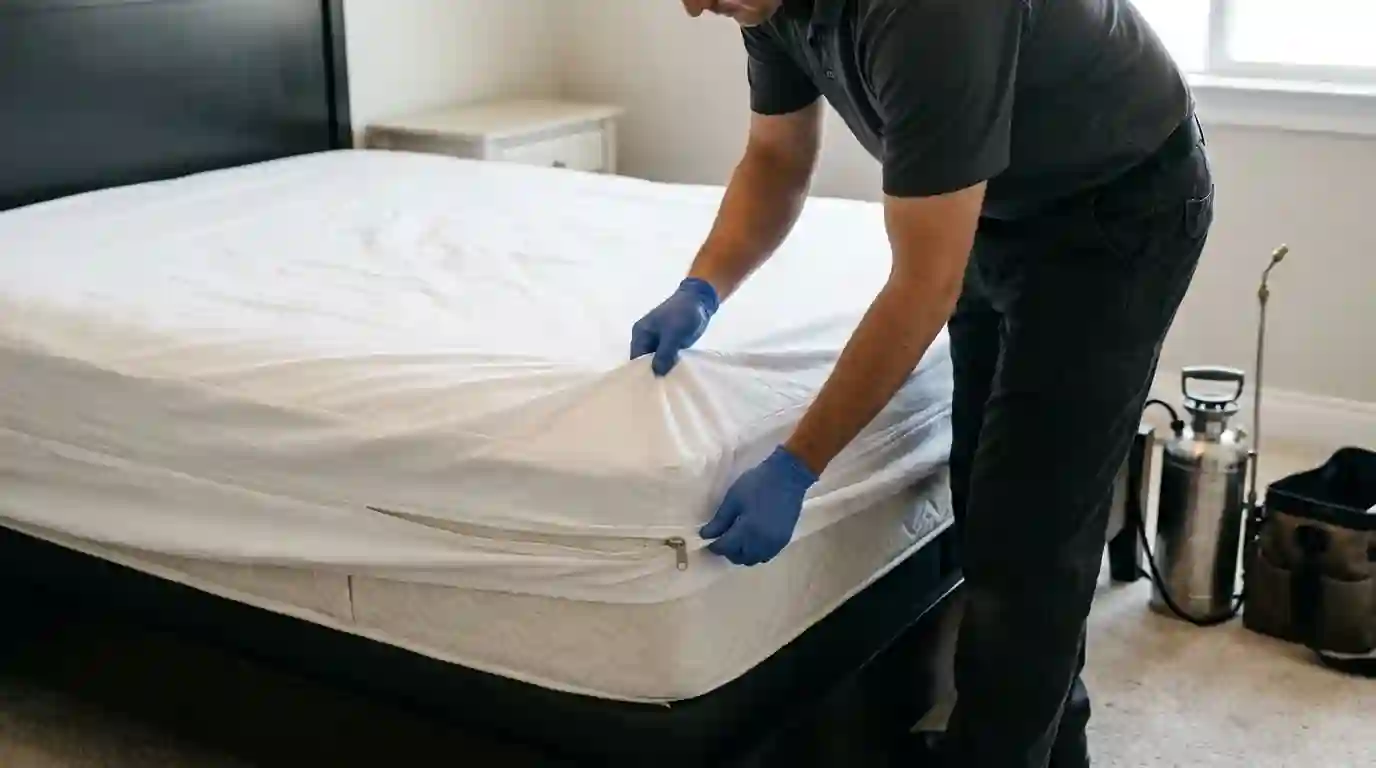
Treatment combines targeted products in seams, cracks and furniture joints, steam where appropriate, and mattress encasements that trap any bugs left inside. Because eggs resist most treatments, we return to treat newly hatched bugs. In multifamily buildings we recommend inspecting units on either side and above and below.
Signs our technicians look for
Small blood spots on sheets
Rust-colored stains from crushed bugs after feeding.
Dark specks on mattress seams
Fecal spotting that looks like marker dots along seams and tags.
Shed skins and pale eggs
Translucent skins and tiny white eggs in crevices near the bed.
Bites in a line or cluster
Often on arms, neck and shoulders, though reactions vary from person to person.
How we handle bed bug treatment
- 01
Confirm and map
Inspection of beds, furniture and baseboards to confirm bed bugs and find every harborage.
- 02
Prep plan
A clear list for laundry, clutter and what to bag before treatment day.
- 03
Treat
Seams, frames, furniture joints and cracks treated; encasements installed on mattresses.
- 04
Follow up
Return visits to treat newly hatched bugs and confirm activity has stopped.
What changes in Miami-Dade and Broward homes
Miami's busy rental market, tourism and dense condo buildings make bed bugs a steady problem. We do a lot of work in Brickell and Downtown towers, apartments in Little Havana and Allapattah, and short-term rentals on Miami Beach where quick turnaround matters.
For associations and property managers, we can inspect adjacent units and set up a building plan, which is the only way to stop bugs moving back and forth through shared walls.
Before and after the visit
- Wash and dry bedding and clothes from the bedroom on high heat and bag them.
- Reduce clutter around beds and couches so treatment can reach cracks.
- Do not move furniture to other rooms; it spreads the bugs.
- Tell your building manager so neighboring units can be checked.
What it typically costs
Questions about bed bug treatment
Do I have to throw away my mattress?
Usually not. Treating and encasing the mattress traps any remaining bugs and protects it going forward.
How many treatments does it take?
Most homes need an initial treatment and one or two follow-ups to catch eggs that hatch afterward.
Can I sleep in my bed after treatment?
Yes, once treated surfaces have dried. Sleeping in the bed helps draw remaining bugs to the treated areas.
Will my neighbors get them?
In shared buildings, bed bugs can move between units. Inspecting adjoining units is strongly recommended.
Where we do this work
Our technicians handle bed bug treatment across Miami-Dade, Broward and Boca Raton. A few of the places we work most: