Palm and shrub pest treatment in Miami: what you are dealing with
Scale insects, mealybugs and aphids suck sap from palms, crotons, hibiscus, gardenias, ixora and orchids, weakening the plant and producing honeydew that grows sooty mold. Caterpillars like the oleander caterpillar strip leaves quickly. These pests also feed ant colonies, which farm them for honeydew.
We identify the pest on each plant group and choose the right tool: systemic products for scale on palms, horticultural oils for soft-bodied insects, and targeted products for caterpillars. Treatments are scheduled so new generations do not rebuild.
Signs our technicians look for
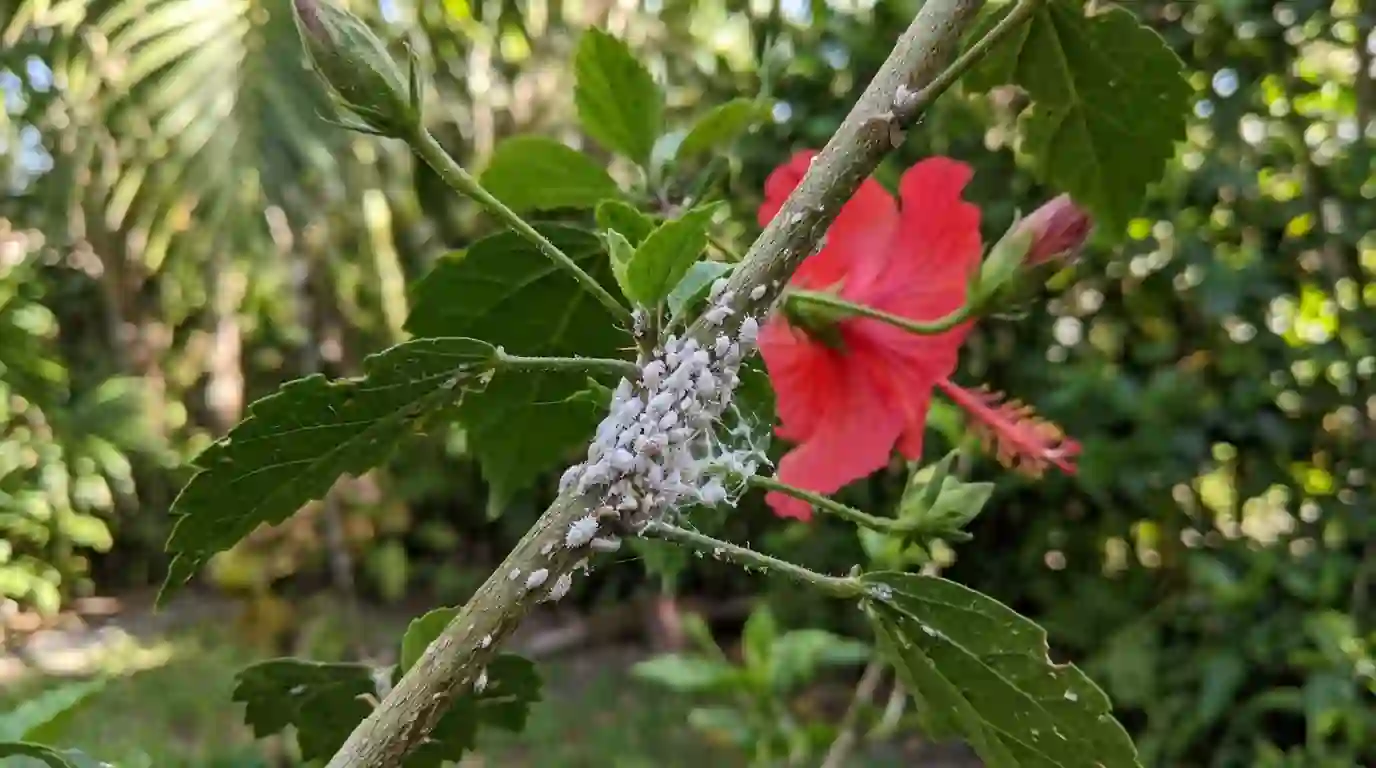
White cottony clusters on stems
Mealybugs on hibiscus, crotons and orchids.
Bumps on palm fronds
Scale insects fixed to leaves and stems.
Ants marching up a plant
Ants farming honeydew-producing insects.
Stripped oleander leaves
Oleander caterpillars eating the foliage.
How we handle palm and shrub pest treatment
- 01
Identify by plant
Each plant group checked and the pest identified.
- 02
Choose the method
Systemic, oil or targeted treatment depending on pest and plant.
- 03
Treat
Applications made with care around blooms and pollinators.
- 04
Schedule follow-ups
Return visits timed to the pest's life cycle.
What changes in Miami-Dade and Broward homes
Palms and tropical shrubs define Miami yards, from the royal palms of Coral Gables to the crotons and hibiscus lining homes in Little Havana and Flagami. Scale on palms and mealybugs on hibiscus are among the most common landscape problems we see.
Many shrub problems tie back to ants, especially white-footed and ghost ants protecting the insects for honeydew. Treating both together works best.
Before and after the visit
- Point out plants showing damage or sticky leaves.
- Hold off on pruning heavily infested plants until after treatment.
- Tell us about edible plants or fruit trees nearby.
What it typically costs
Questions about palm and shrub pest treatment
Can you treat fruit trees?
We use products labeled for edible plants when treating fruit trees and follow harvest intervals.
Why do ants keep showing up on my plants?
Ants farm scale and mealybugs for honeydew. Controlling the insects reduces the ants.
How often should palms be treated?
It depends on the pest. Scale on palms often needs a systemic treatment once or twice a year.
Do you trim palms?
We focus on pest treatment. A tree service handles trimming.
Where we do this work
Our technicians handle palm and shrub pest treatment across Miami-Dade, Broward and Boca Raton. A few of the places we work most: