Drywood termite spot treatment in Miami: what you are dealing with
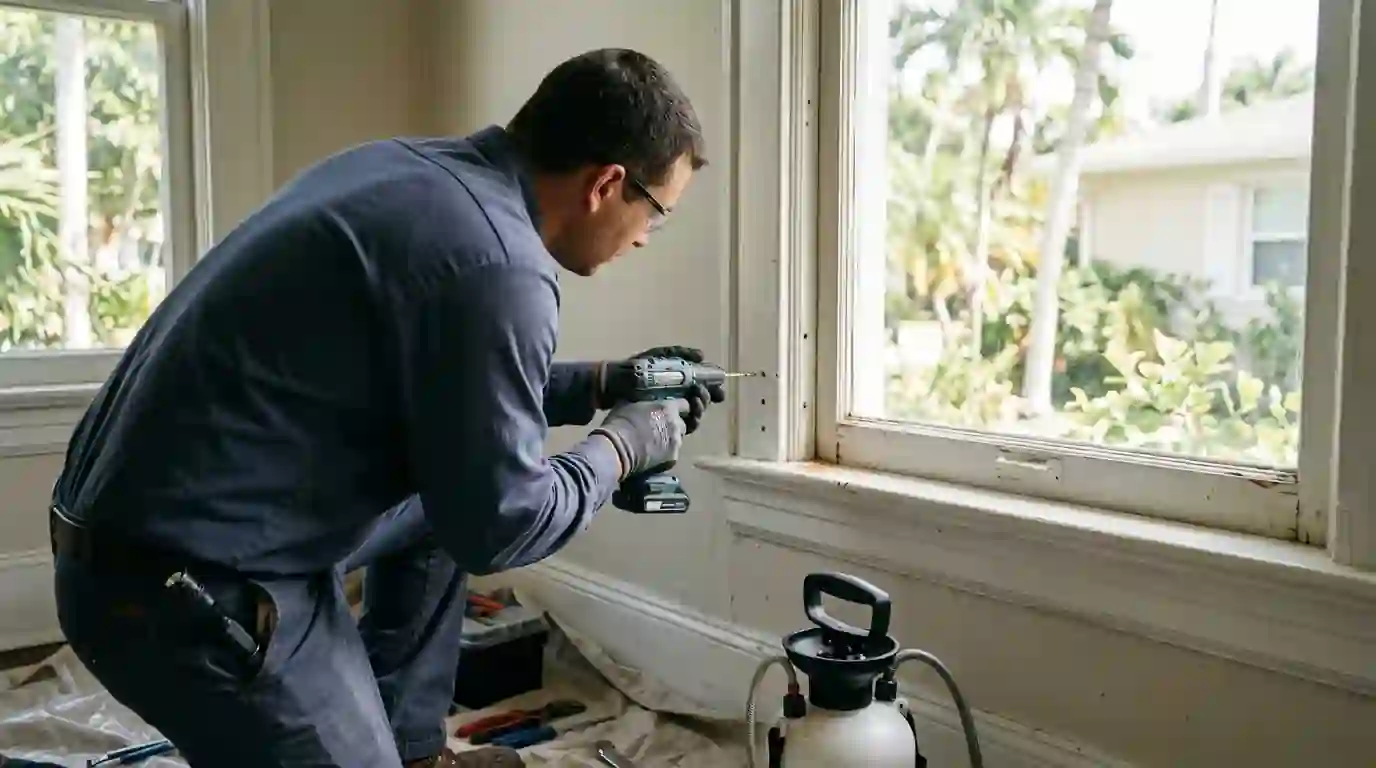
Spot treatment is the right call when we can find the edges of the colony. A single window buck with pellets below it, a door casing with kick-out holes, or a wooden chair that started dropping frass after it came out of storage are all good candidates. We trace the galleries with a moisture meter and by sound, then drill small holes along them and inject product where the termites are actually living.
We are honest about the limits. Drywood colonies do not connect to each other, so treating one frame does nothing for a colony in the attic you have not found yet. If the inspection suggests more activity than we can reach, we will tell you that tenting is the better spend.
Signs our technicians look for
One pile of pellets that keeps returning
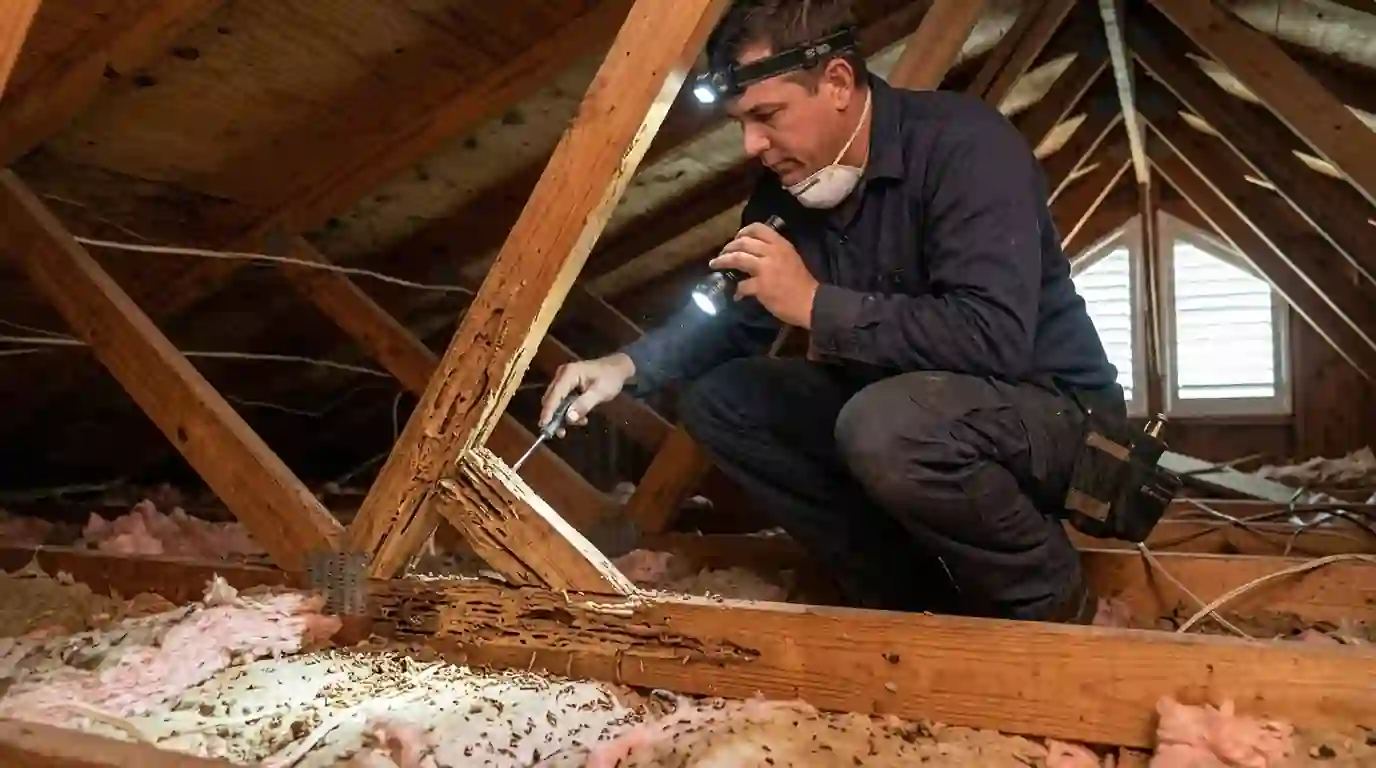
A small mound below the same frame after every cleaning points to a single colony above it.
Tiny round holes in trim
Kick-out holes about the size of a pinhead, sometimes plugged with a light brown paste, are where pellets come out.
Blistered paint on a window sill
Galleries just under the surface make paint bubble or sag before the wood fails.
A piece of furniture dropping frass
Older wood furniture can bring drywood termites into a home that had none.
How we handle drywood termite spot treatment
- 01
Map the colony
Moisture meter, tapping and probing to find where the galleries run inside the wood.
- 02
Drill and inject
Small holes along the galleries, product injected until it moves through the colony, holes plugged and touched up.
- 03
Clean up the frass
We clear the pellets so you can tell whether new ones appear.
- 04
Check back
A follow-up visit to confirm no new frass is showing up below the treated area.
What changes in Miami-Dade and Broward homes
Window bucks are the classic Miami spot job. Concrete block homes from the 1950s through the 1980s were built with wood bucks around each opening, and when an older aluminum window starts weeping, the bucks stay damp and drywood termites move in. If the frame is also rotted, we will tell you so you can plan the window repair alongside the treatment.
In condos and apartments, spot treatment is often the only practical option for a single owner, because tenting a tower is not possible. We treat what is in the unit, and if frass is coming from shared walls or the building's wood trim, we document it for the association.
Before and after the visit
- Do not vacuum the pellets before the visit; they help us locate the colony.
- Move furniture and curtains away from the affected wall about three feet.
- Tell us if the frame is painted with a finish you want matched afterward.
What it typically costs
Questions about drywood termite spot treatment
How do I know if spot treatment is enough?
If activity is limited to one or two accessible areas and the inspection does not find frass elsewhere, spot treatment is reasonable. If pellets are turning up in several rooms or the attic, tenting usually costs less over time.
Will the drilled holes show?
The holes are small and are plugged and touched up. On stained wood they can be visible up close; we discuss that before we drill.
Can you treat furniture without treating the house?
Yes. Infested furniture can be spot treated, and smaller pieces can sometimes be isolated and treated on their own.
How soon will the pellets stop?
You may see a few pellets for a week or two as the colony dies. New, steady piles after that mean we missed a gallery, and the follow-up visit covers it.
Where we do this work
Our technicians handle drywood termite spot treatment across Miami-Dade, Broward and Boca Raton. A few of the places we work most: