Two whiteflies, two calling cards
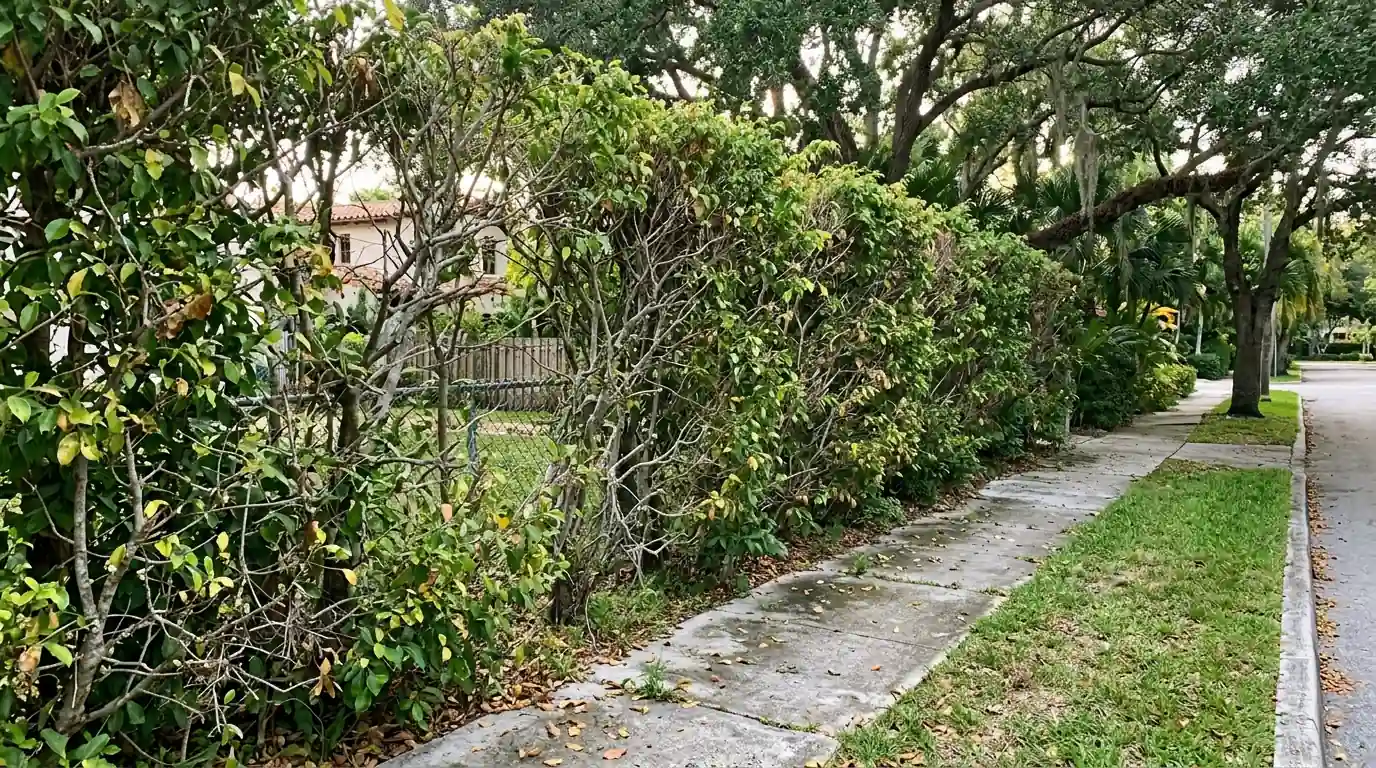
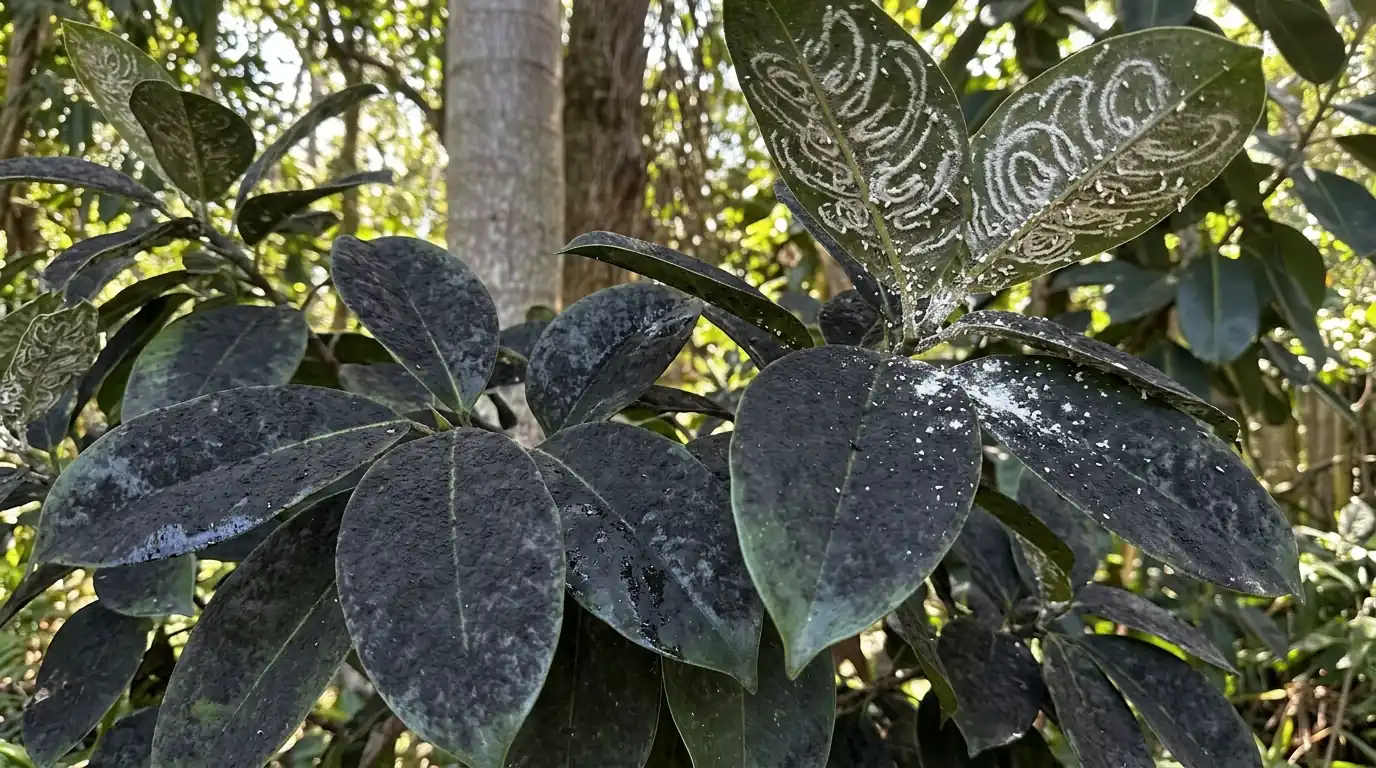
Ficus whitefly feeds on ficus hedges and trees, causing yellowing and heavy leaf drop. Rugose spiraling whitefly leaves white, waxy spiral patterns on the underside of leaves on gumbo limbo, black olive, coconut palms and many ornamentals, and drips sticky honeydew. Both are invasive in South Florida.
The sooty mold that follows
Honeydew from whitefly feeds a black fungus called sooty mold. It coats leaves, walls, cars and furniture under infested plants. Sooty mold itself does not attack the plant directly, but it blocks light and is a sure sign of sap-sucking insects above.
How treatment works
- Identify which whitefly is present and which plants it is on
- Systemic treatments taken up by the roots or trunk protect the whole plant
- Foliar treatments reduce heavy populations quickly
- Repeat on a schedule because whitefly flies in from neighboring plants
Choosing what to plant next
If you are replacing a hedge that whitefly destroyed, ask your landscaper about native or less susceptible species. Clusia, cocoplum and podocarpus are commonly used for privacy in South Florida, and a mix of species is less likely to be wiped out by a single pest than a long run of one plant.
Will the hedge come back?
A healthy ficus hedge that lost its leaves to whitefly usually leafs out again within a few months once the insects are under control. Sooty mold on plants weathers off with time; on hard surfaces, soapy water removes it.
Field tip: Talk to your neighbors if they have ficus hedges too. Whitefly moves between properties, and treating only one side of a shared hedge rarely holds.
Quick questions
Can I just prune the infested branches?
Pruning helps a little, but whitefly spreads quickly. Treatment is usually needed.
Is whitefly harmful to people?
No. It is a plant pest, though honeydew and sooty mold are messy.