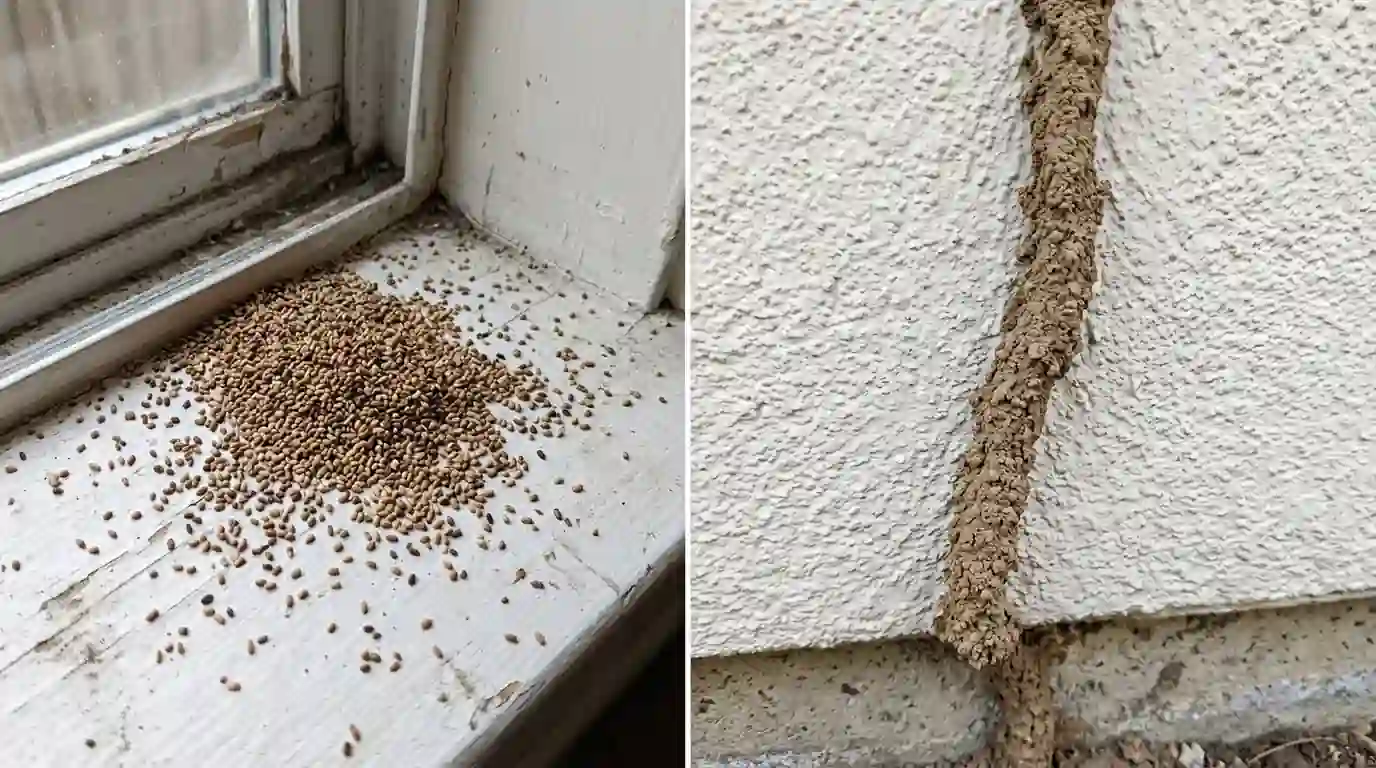
Two termites, two lifestyles
Drywood termites live entirely inside the wood they eat. A colony can sit in a single window frame, a rafter or a dresser and never touch the ground. Subterranean termites, including the invasive Formosan and Asian subterranean species that are established in South Florida, live in the soil and travel into the house through mud tubes they build to stay moist.
That difference decides everything about treatment. Tent fumigation reaches drywood colonies hidden anywhere in the structure, but it leaves the soil untouched. Soil treatment and bait stations stop subterranean termites, but they do nothing for a drywood colony living in the attic.
Clues that point to drywood termites
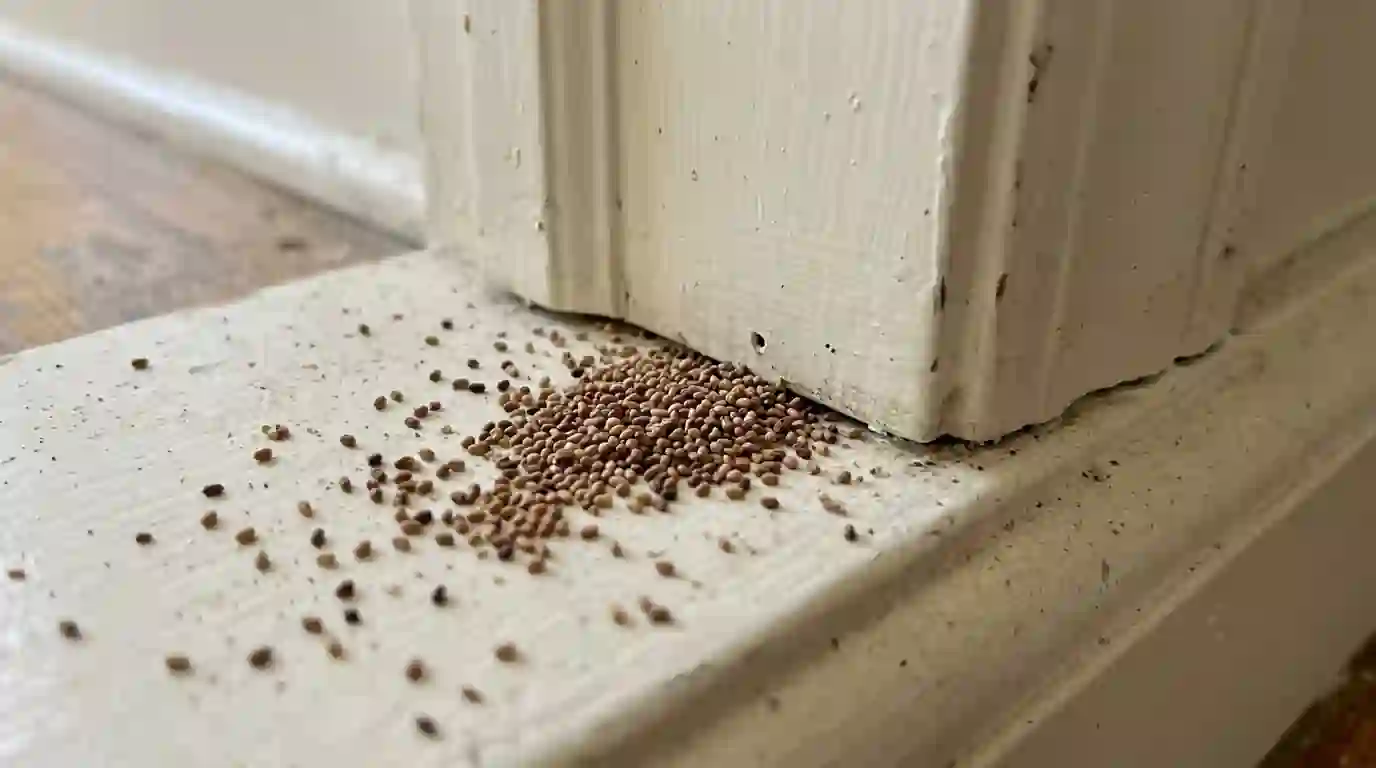
- Small, hard, six-sided pellets piling up below a frame, sill or piece of furniture
- Pinhead-size kick-out holes in trim, sometimes sealed with a light paste
- Swarmers or wings indoors, often around lights on warm evenings
- Damage that looks clean inside, with smooth galleries and no soil
Pellets are the giveaway. Drywood termites push their droppings out of the wood through tiny holes, and the pellets collect in small piles that come back after you sweep. They look like coarse sand or ground pepper and vary in color with the wood.
Clues that point to subterranean termites
- Pencil-width mud tubes on stucco, the slab edge, pipes or the garage wall
- Swarms from a bathroom, kitchen or anywhere plumbing passes through the slab
- Damaged wood packed with soil and following the soft grain
- Activity near leaks, irrigation overspray or mulch against the house
Subterranean termites never leave dry pellets. If you break a mud tube and it is rebuilt in a day or two, the colony is active. Formosan and Asian subterranean termites can also nest above ground inside a wall that stays wet from a leak, which is why moisture problems and termite problems so often show up together in Miami.
What each treatment protects
Tent fumigation kills drywood termites anywhere in the structure on the day of treatment, but it leaves nothing behind to stop new colonies. Spot treatment protects only the boards that were treated. Soil treatment and bait stations protect the house from subterranean termites coming up from the ground for years, but they do nothing for termites already living in dry wood above.
That is why so many Miami termite plans combine two approaches, and why a good inspection report names the termite before naming the treatment.
What to do with what you find
Do not vacuum pellets or spray the area before an inspection. Leave the evidence where it is, collect a few swarmers in a sealed bag if you see them, and take photos of mud tubes before breaking them. Those details let the inspector identify the termite quickly.
Field tip: Many Miami homes have both. A house can need tenting for drywood termites and a soil or bait program for subterranean termites. Ask for both to be checked on the same visit.
Quick questions
Can one house have both drywood and subterranean termites?
Yes, and it is common in Miami-Dade. Each needs its own treatment, so an inspection should look for both.
Are Formosan termites drywood or subterranean?
Formosan termites are a subterranean species, although they can nest above ground in wet walls.