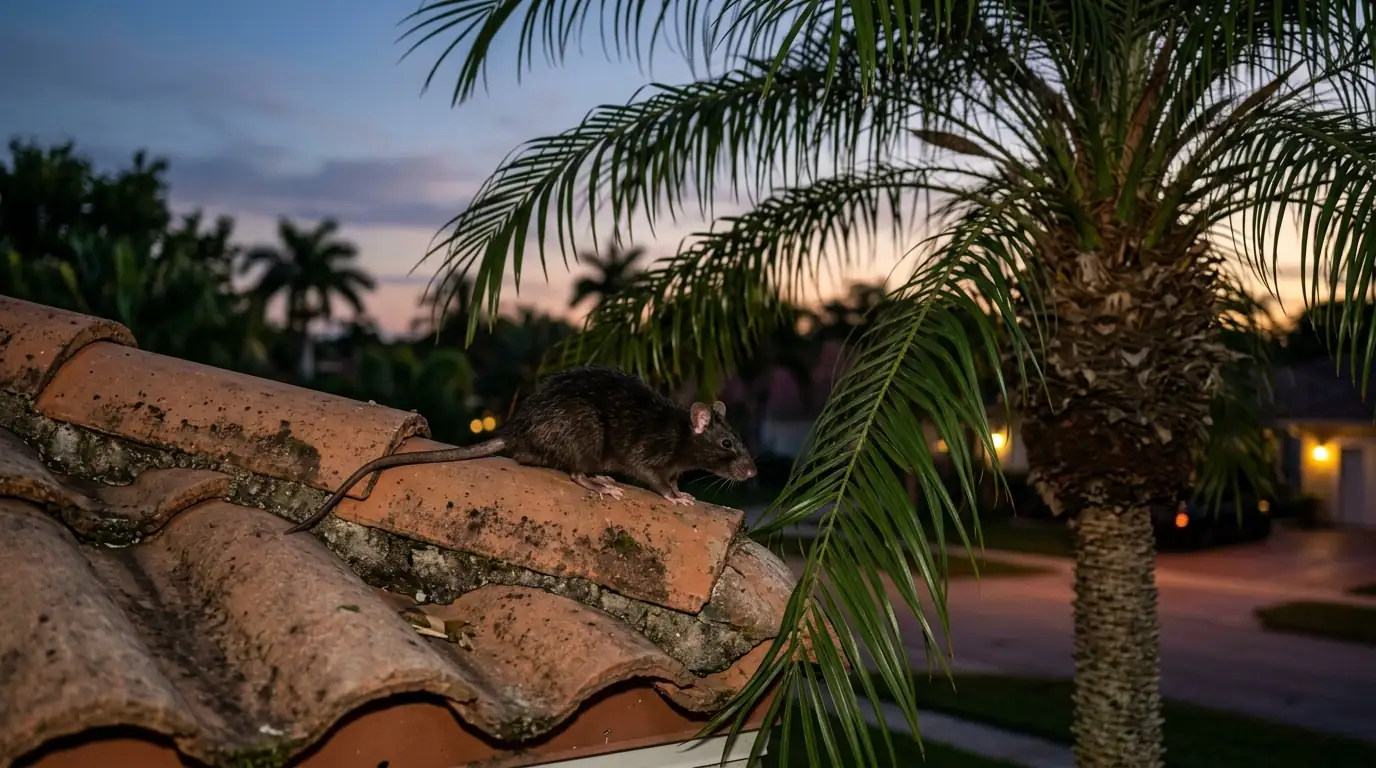
Why Miami suits roof rats
Roof rats are slender, agile climbers that prefer to live above ground. Miami gives them everything: coconut and royal palms for nesting, mango, avocado and citrus trees for food, power lines and fence tops for travel, and warm attics full of insulation. Their population rises in summer when fruit is plentiful.
Signs to look for
- Running, scratching or gnawing overhead at night
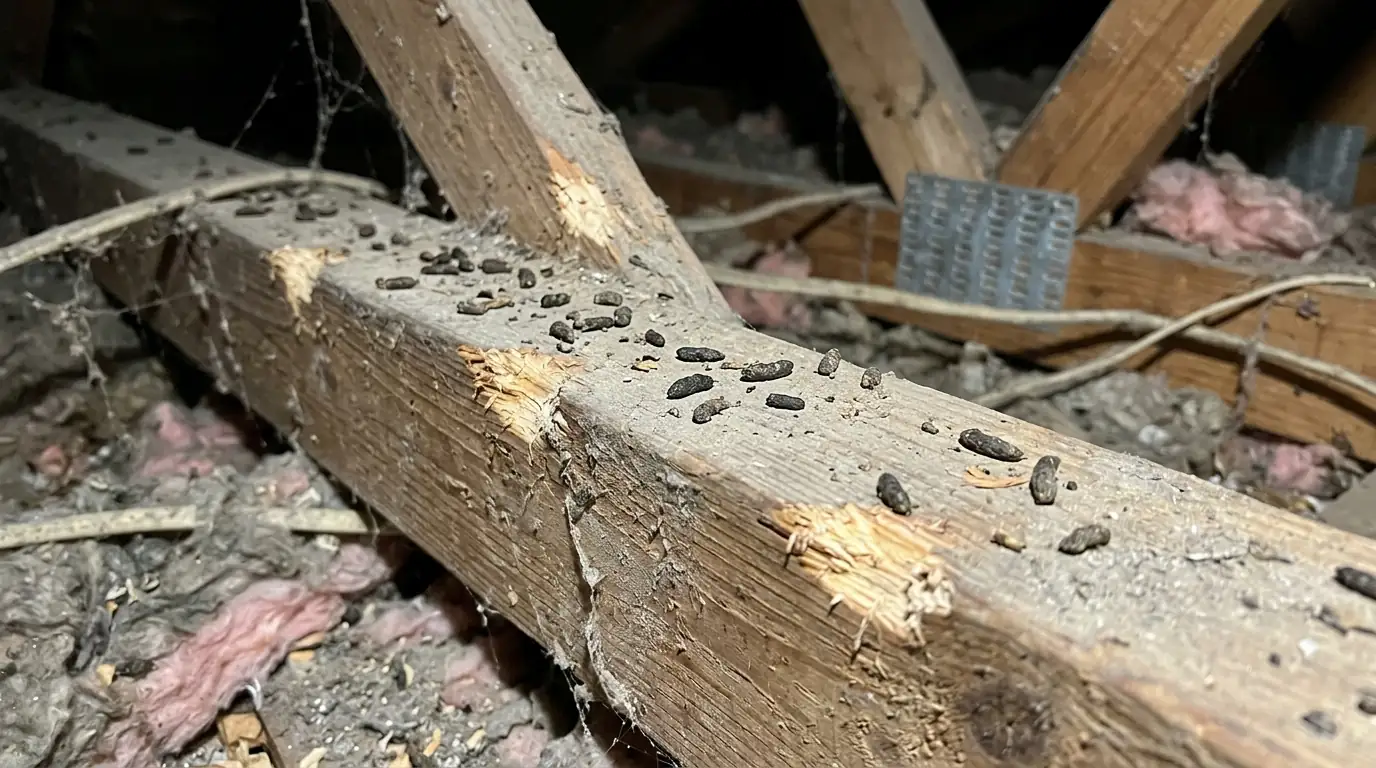
- Spindle-shaped droppings about half an inch long in the attic or garage
- Fruit hollowed out while still on the tree
- Grease marks along rafters, beams and the top of the garage door
- Chewed AC duct insulation or wiring in the attic
How they get in
Roof rats come in high. The usual entries are gaps at soffit returns, the open ends of barrel tile courses at the eaves, gable and ridge vents, roof-to-wall joints, AC line chases and gaps around plumbing vents. Anything wider than about half an inch is enough for a young rat.
When to call for help
If you are hearing activity every night, finding fresh droppings or seeing chewed wiring or duct insulation, it is time for a professional inspection. Rats breed quickly in warm attics, and every week adds droppings, urine and damage to clean up later.
Mention any recent roof work or storm damage when you call. New gaps from repairs are one of the most common reasons rats appear in a house that never had them before.
Why traps alone are not enough
Trapping removes the rats already inside, but if the openings stay open, new rats move in. Lasting control combines trapping in the attic with sealing every gap at the roofline using chew-proof materials, then checking back until the noise stops.
Field tip: Pick up fallen fruit every day during mango season, keep branches at least six feet from the roof, and store pet food and birdseed in sealed bins. Those three habits cut rat pressure a lot.
Quick questions
Is it a rat or a squirrel?
Squirrels are active by day; roof rats are mostly active at night, often after midnight.
Do I need to clean the attic afterward?
After a long infestation, droppings and urine in the insulation are worth removing. See our attic cleanup service.