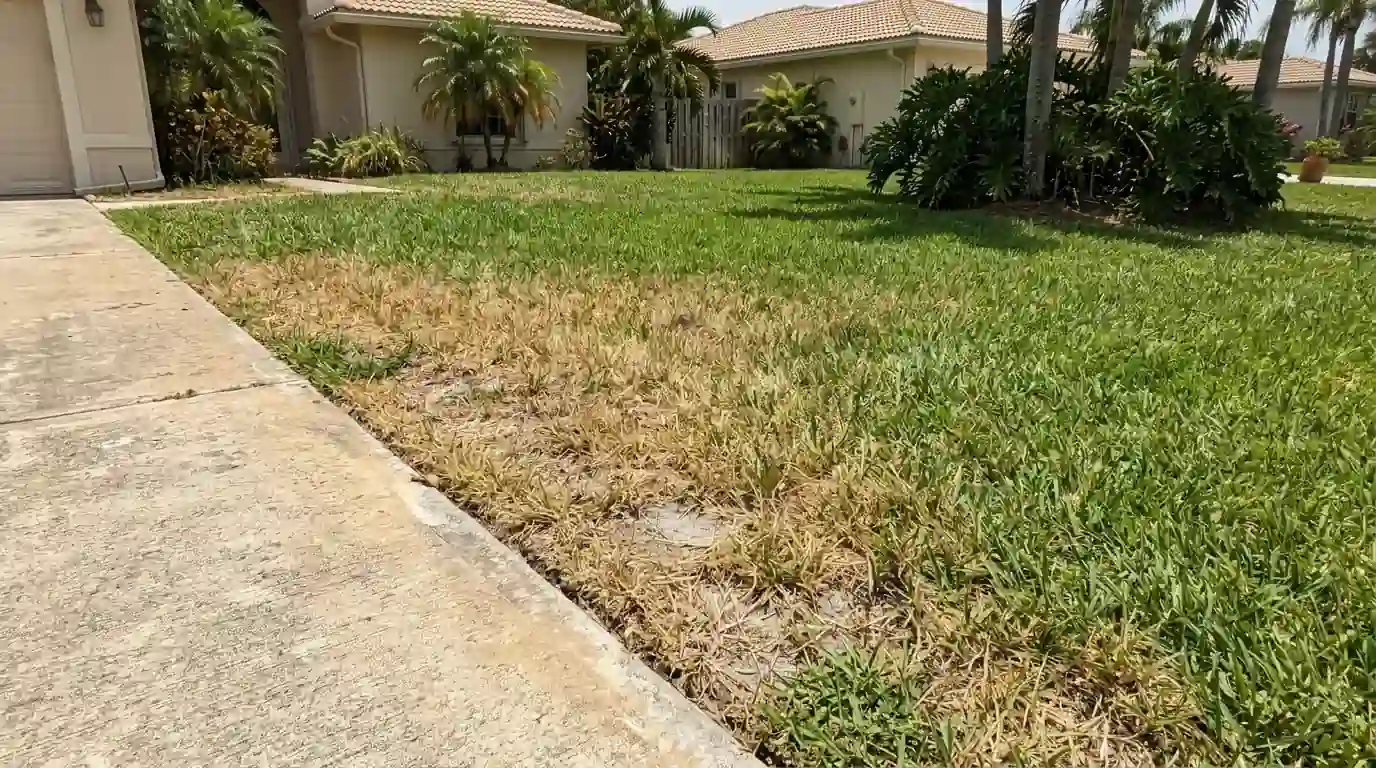
How chinch bug damage looks
Southern chinch bugs feed at the base of St. Augustine grass, sucking out sap. The grass yellows, then turns brown in irregular patches that grow outward. Damage usually starts in the hottest, sunniest spots, along driveways, sidewalks and the south side of the house.
A simple test
- Kneel at the edge where brown grass meets green
- Part the grass and look at the base of the stems
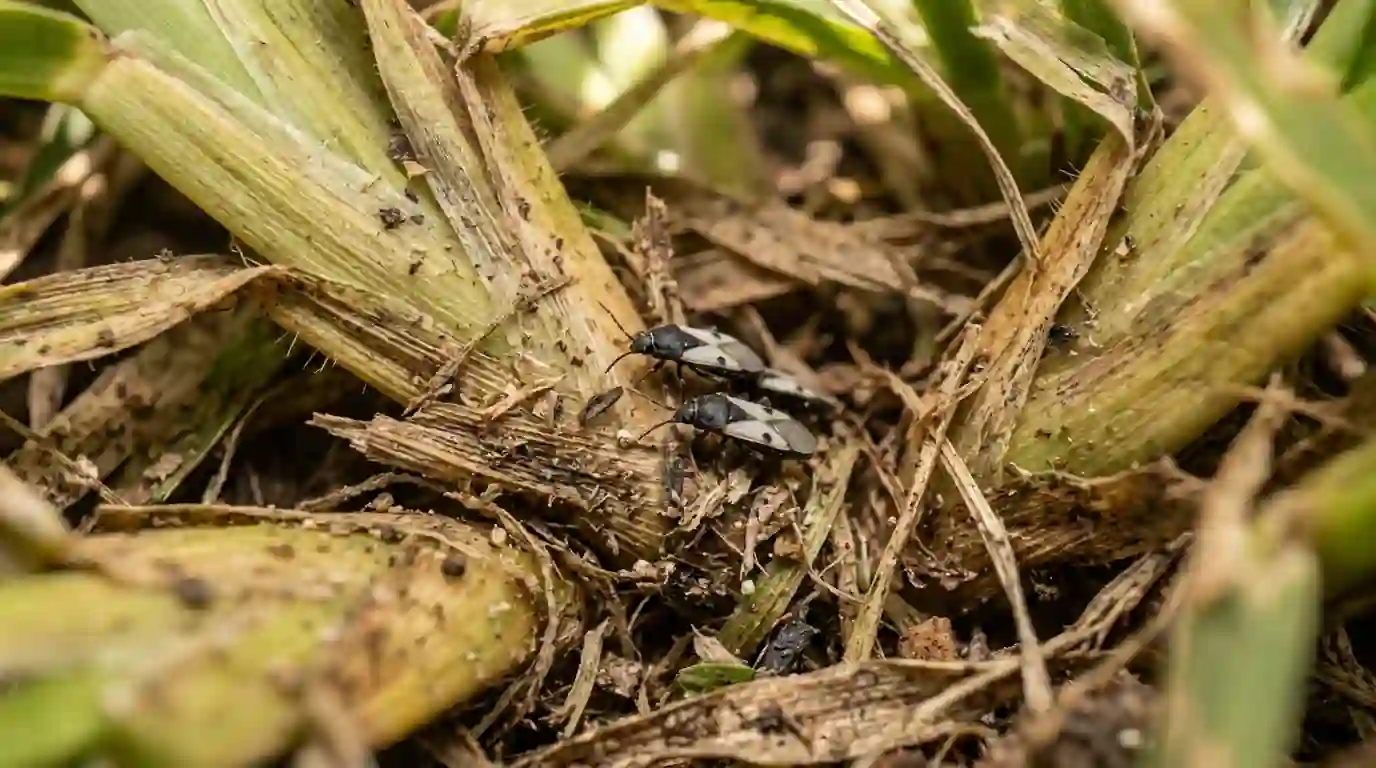
- Look for tiny black insects with white wing patches, or reddish nymphs
- A coffee can with both ends cut out, pushed into the soil and filled with water, will float chinch bugs to the surface
If it is drought
Drought-stressed grass tends to be evenly dull and wilted across an irrigation zone, with footprints that stay visible. It perks up after proper watering. Check sprinkler coverage too; a clogged head can leave a dry patch that looks like insect damage.
Mowing and watering habits that help
- Mow St. Augustine at the higher end of its recommended height
- Water deeply on your allowed days rather than lightly
- Avoid heavy fast-release nitrogen in summer
- Check sprinkler coverage along driveways and sidewalks
Healthy, unstressed grass resists chinch bugs better and recovers faster when they do show up.
If it is chinch bugs
Watering will not bring back grass killed by chinch bugs. Treatment targets the active edge plus a buffer, and chinch bugs in Florida have built resistance to some products, so rotating what is used matters. Dead areas usually need plugs or sod once the bugs are under control.
Field tip: Go easy on fast-release nitrogen fertilizer in summer. Lush, soft growth is exactly what chinch bugs like.
Quick questions
Do chinch bugs attack every type of grass?
They strongly prefer St. Augustine grass.
When are chinch bugs worst in Miami?
In hot, dry stretches from late spring through summer.