When swarms happen in Miami
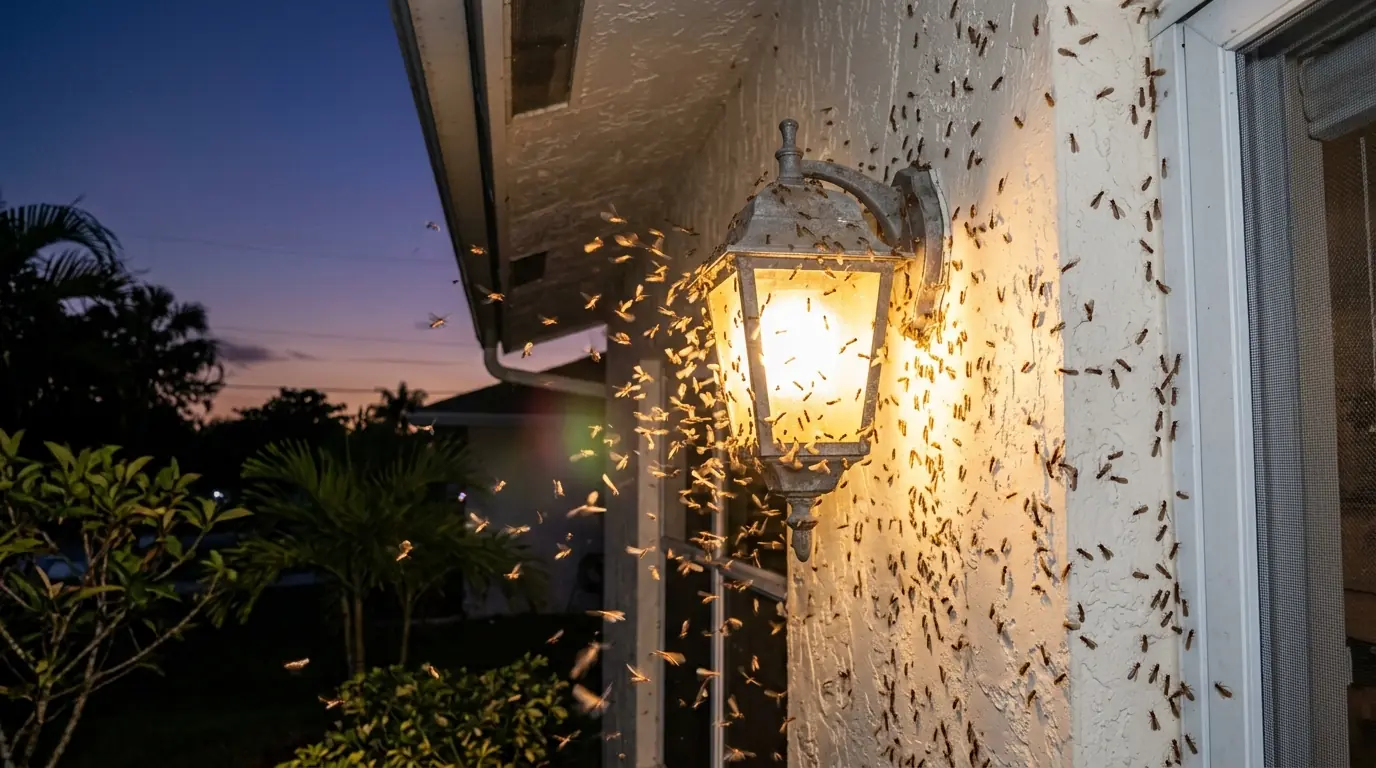
Asian subterranean termites tend to swarm from late winter into spring, often at dusk after a warm day. Formosan termites follow from spring into early summer, usually on humid evenings after rain, and their swarms around streetlights can look like snow. Drywood termites swarm in smaller numbers from spring through summer, often at night and attracted to indoor lights.
These are general patterns, not a calendar. A string of warm, humid evenings is usually what sets them off.
Inside or outside makes the difference
- Swarmers flying outdoors around a streetlight: colonies are in the neighborhood, not necessarily in your home
- Swarmers indoors near a window: a colony may be inside the house or the swarmers came in through a gap
- Swarmers coming from a bathroom or kitchen: subterranean termites may be using plumbing penetrations
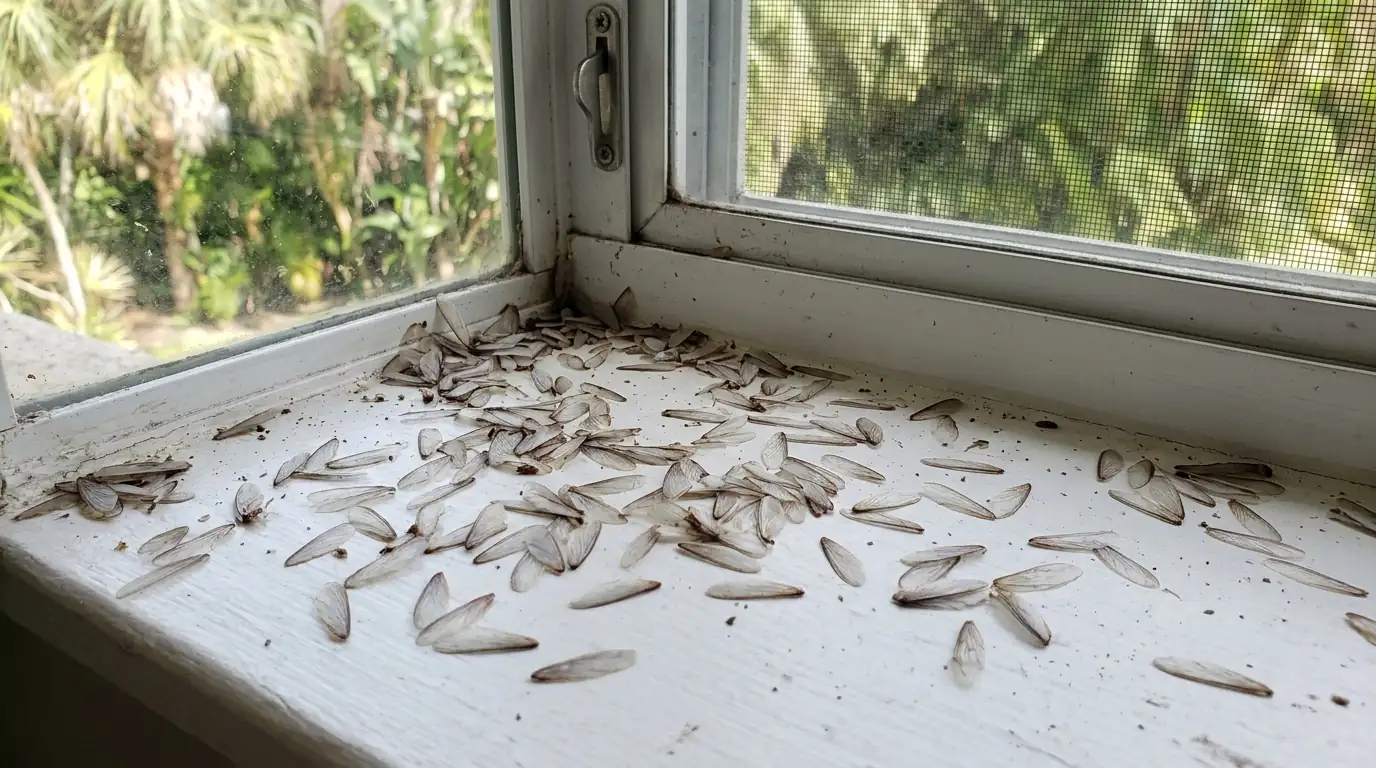
- Wings piling up on a sill day after day: a strong sign of a colony in or very near the structure
Termites or flying ants?
Termite swarmers have straight antennae, a thick waist and four wings of equal length that break off easily. Flying ants have elbowed antennae, a pinched waist and front wings longer than the back wings. Termite wings are shed within minutes, which is why you often find wings with no insects.
Simple ways to cut swarm attraction
Swarmers fly toward light. During swarm season, switching porch lights off for the first hour after dusk, closing blinds in lit rooms and keeping screens in good repair reduces how many end up inside. None of this affects the colony that produced them, but it keeps your evenings calmer while you wait for an inspection.
If you live in a condo, tell management when you see swarmers inside. Several units reporting swarms at once is useful information for the association.
What to save for the inspector
- A few swarmers in a sealed bag or jar, or a pile of wings
- The date, time and room where you saw them
- Photos of any pellets or mud tubes nearby
Field tip: Swarmers die quickly indoors and do not start new colonies inside a dry house on their own. The swarm is a message about an existing colony, so do not panic, but do book an inspection.
Quick questions
Do termite swarmers bite?
No. Swarmers do not bite or sting and do not damage wood themselves.
Should I spray the swarm?
You can vacuum them up, but spraying does nothing for the colony that produced them.