Meet the ant
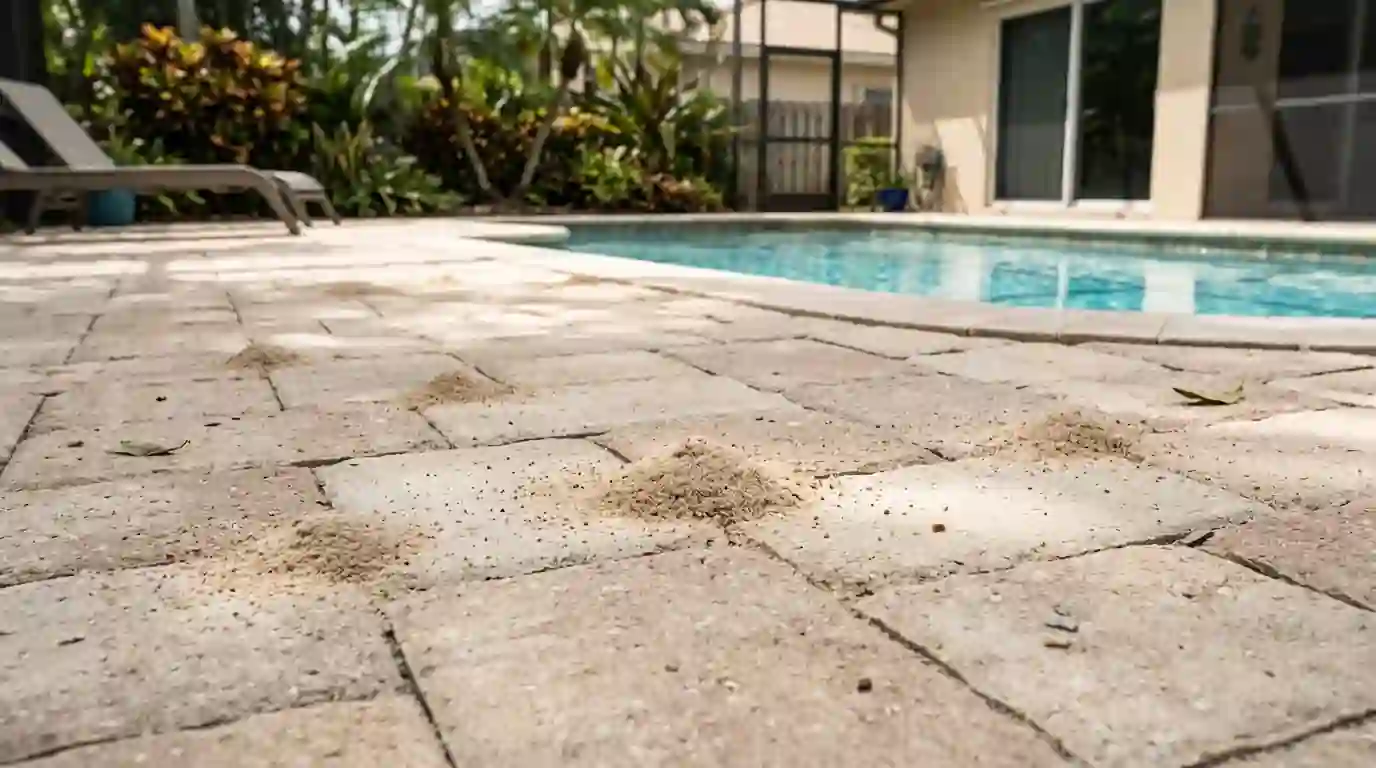
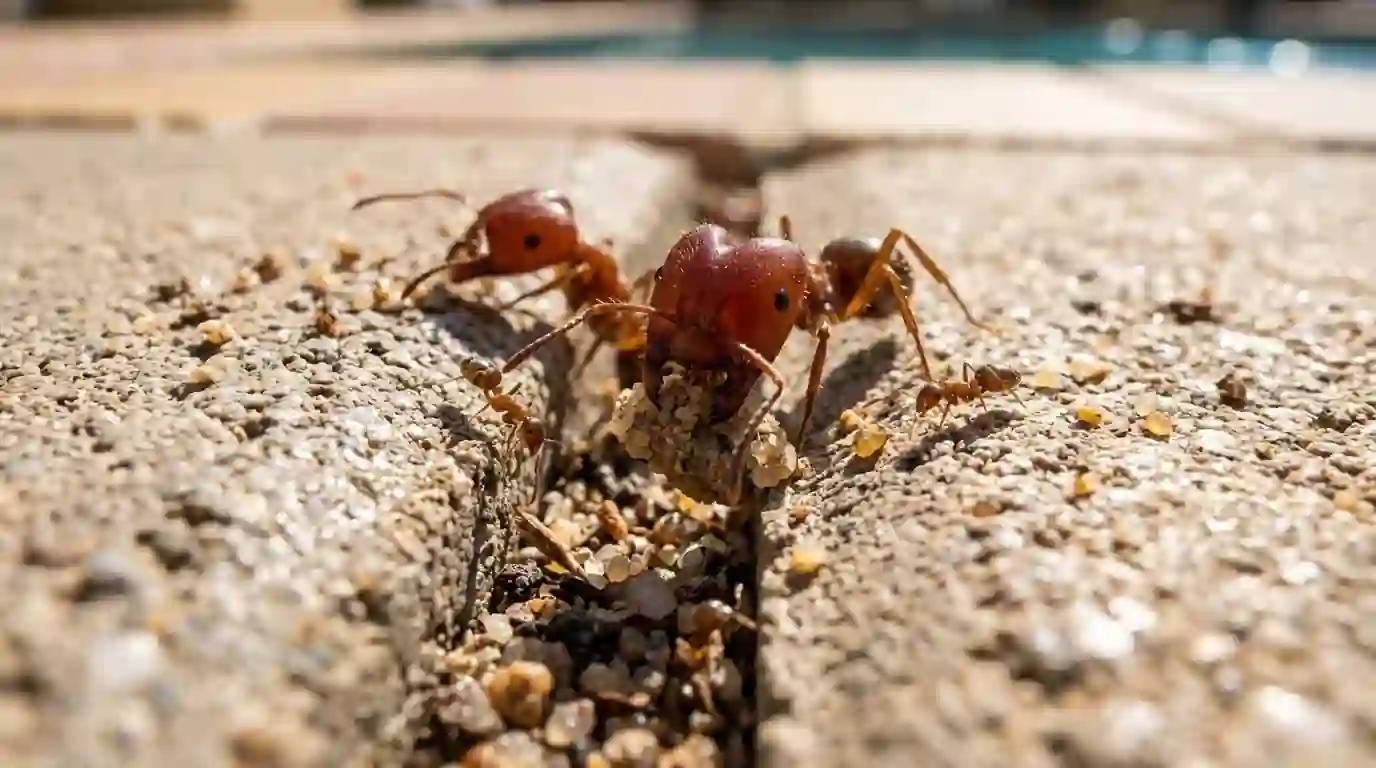
Big-headed ants are small, reddish-brown invasive ants common in South Florida. The colony has two kinds of workers: small ones that forage and larger soldiers with oversized heads. They nest in soil under pavers, along slab edges and in planter beds, and they push excavated sand and soil to the surface as they dig.
Why the piles keep coming back
Colonies have many queens and spread under a whole patio or driveway. Sweeping the sand away does nothing to the nest, and repellent sprays send them to new joints. The ants also wander indoors along baseboards, especially in dry weather.
When to call
If sand keeps appearing in the same joints for more than a week, or ants are trailing indoors, it is time for baiting. Treatment works best before polymeric sand is reapplied, so the colony is under control first and the new joints stay clean.
What works
- Granular and gel baits placed along active joints and slab edges
- Non-repellent perimeter treatment around the house
- Refilling paver joints with polymeric sand after the colony is under control
- Pulling mulch and soil back from the slab edge
Quick questions
Are big-headed ants the same as fire ants?
No. Big-headed ants rarely sting people, while fire ants build mounds and sting aggressively.
Do big-headed ants damage pavers?
Their digging undermines the sand bed, which can make pavers settle and shift over time.