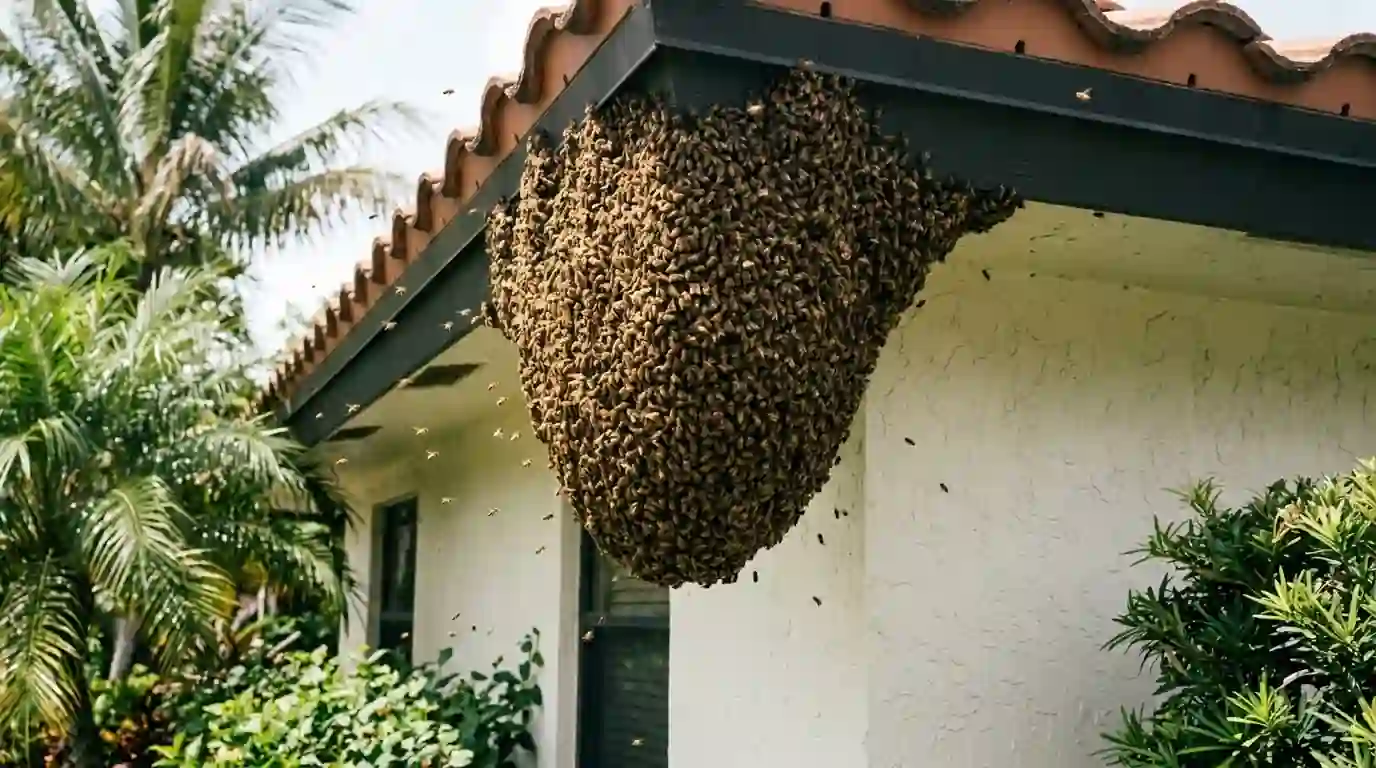
Swarm or hive?
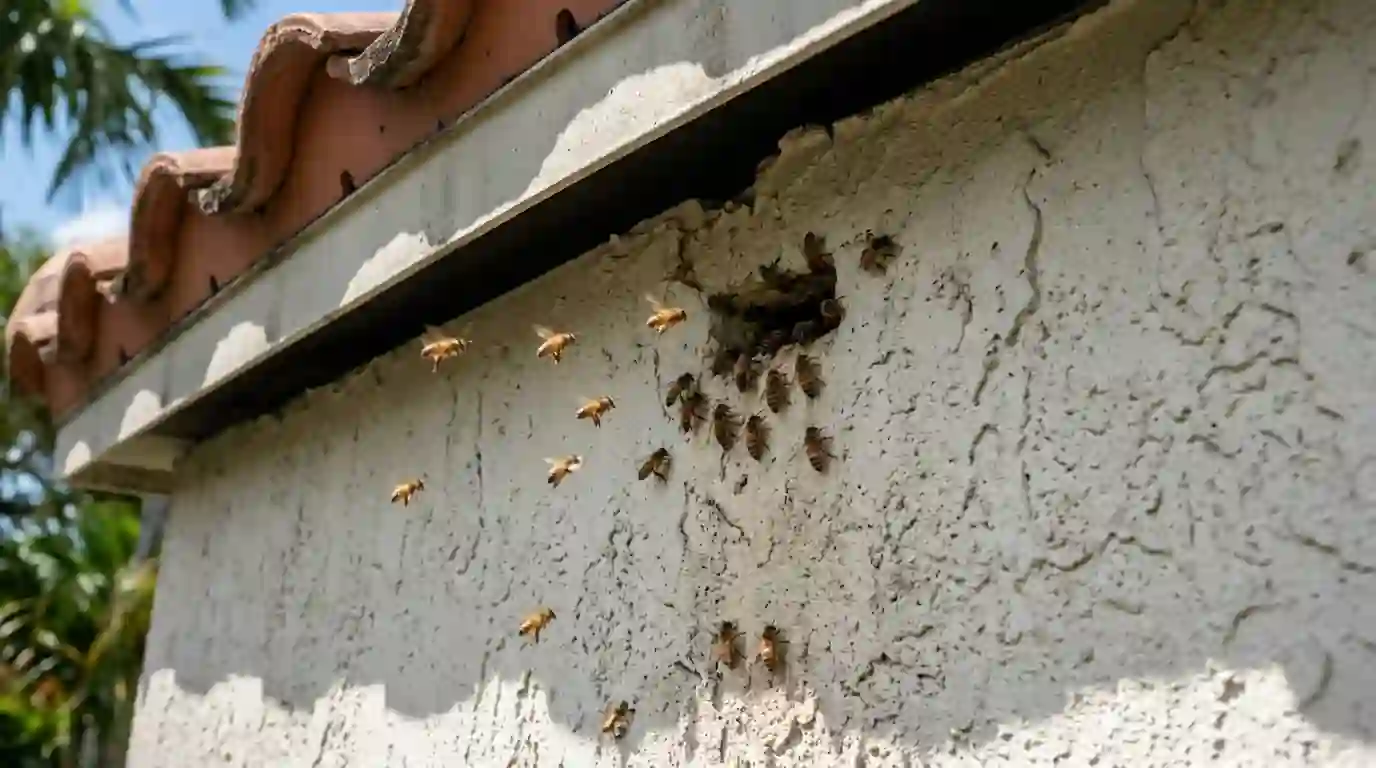
A swarm is a cluster of bees resting while scouts look for a new home. It may move on within hours or days. An established hive is a colony that has moved into a cavity, such as a wall, soffit, meter box, irrigation box or hollow palm, and started building comb. Hives do not leave on their own.
Why not to spray or seal
- Spraying can trigger defensive behavior and multiple stings
- Plugging the entry hole sends bees looking for another way out, sometimes into the house
- Killed colonies leave comb and honey that melts, stains and attracts roaches and ants
- Africanized honey bees are present in South Florida and can be very defensive
Preventing the next colony
Bees look for dry, protected cavities. Seal gaps at soffits, fascia and roof returns, put lids on irrigation and meter boxes, and fill hollow spots in palm boots where possible. Once a colony has been removed, cleaning and sealing that exact spot is the most important step, because the old comb scent attracts new swarms.
What to do while you wait
- Keep people and pets well away
- Do not run lawn equipment nearby
- Note where bees enter and how long they have been there
- If someone is stung many times or has an allergic reaction, call 911
Field tip: Once the bees are removed, the comb has to come out and the cavity must be sealed. Otherwise the scent draws a new swarm to the same spot.
Quick questions
Can I tell if bees are Africanized?
Not by looking. Treat every colony with caution.
Will a swarm leave on its own?
Often within a few days, but if it moves into a cavity on your house, it becomes a hive that needs removal.