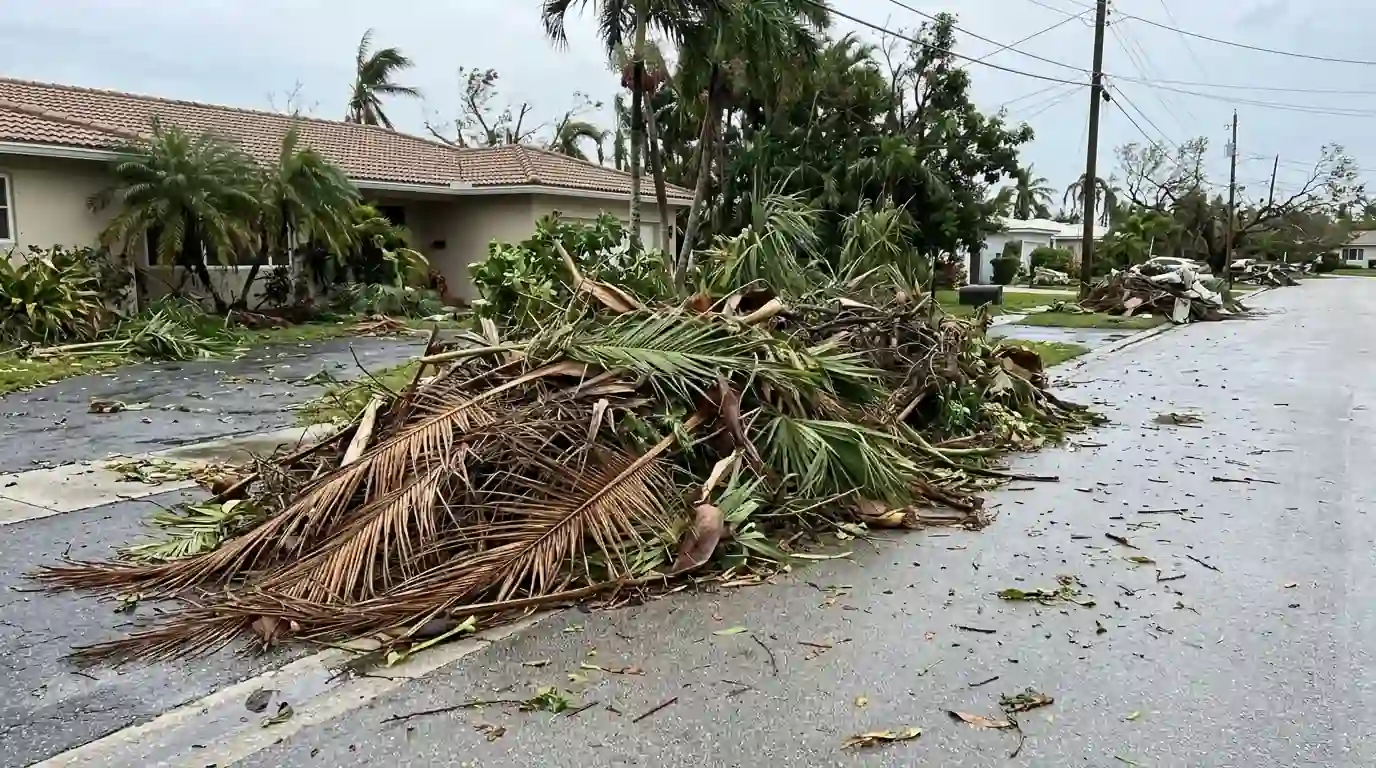
The first two weeks
- Fire ants and other ants rafting out of flooded soil and moving indoors
- Palmetto bugs driven from sewers and drains by high water
- Mosquito populations exploding in debris, tarps and containers
- Rodents displaced from flooded areas and damaged buildings
Be careful around debris piles. Fire ant rafts and displaced snakes and rodents hide in them, so wear gloves and boots when moving debris.
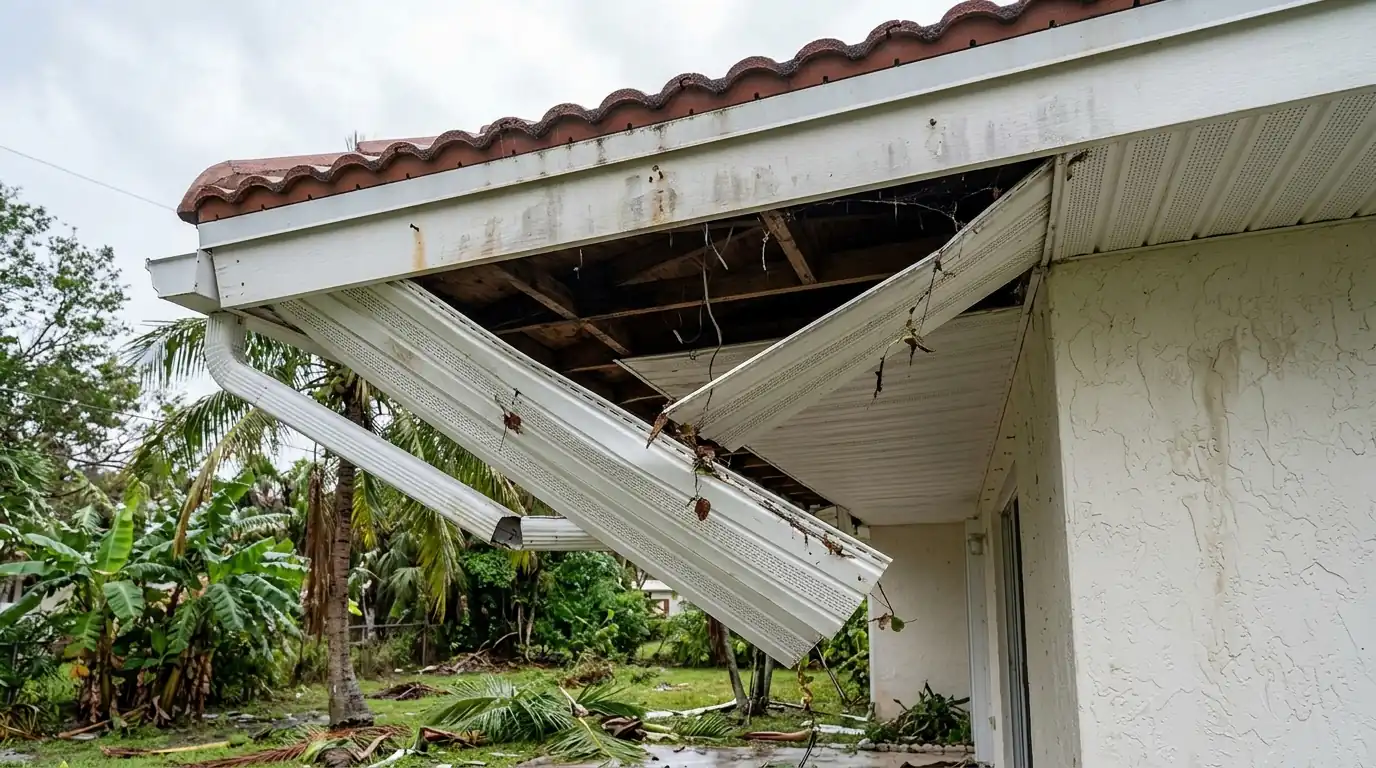
Check the roofline
Storms loosen soffits, lift roof tiles and open gaps at vents and fascia. Those openings are exactly what roof rats, squirrels and raccoons look for. A walk around the house looking up at the roofline right after the storm can save you a rodent problem in the attic later.
Building a pest-aware storm kit
Add a few pest items to your hurricane kit: insect repellent, heavy gloves for moving debris, a flashlight for checking the attic and sealed bins for food. After the storm, keep food sealed and trash closed even if pickup is delayed; rodents and roaches find unsecured waste within days.
Wet wood and termites
Roof leaks and water intrusion leave framing and drywall wet. Formosan and Asian subterranean termites can take advantage of wet walls, and wood-decaying fungi start in wood that stays damp. Drying the structure quickly and repairing leaks matters for more than mold.
Field tip: Keep photos of storm damage, including pest-related damage. Insurance adjusters may ask about it, and documentation from a pest inspection can help.
Quick questions
When should I schedule a post-storm inspection?
Once the property is safe and water has receded, usually within a couple of weeks.
Are mosquitoes worse after a hurricane?
Often yes, because of standing water in debris and containers.