
Telling them apart
- Roof rats are slender with a pointed nose, large ears and a tail longer than the body
- Norway rats are heavier with a blunt nose, small ears and a tail shorter than the body
- Roof rat droppings are spindle-shaped with pointed ends
- Norway rat droppings are larger and capsule-shaped with blunt ends
Where each one lives
Roof rats climb. They nest in palms, fruit trees, attics and soffits, and travel along power lines and fence tops. Norway rats burrow. They live in the ground along canals, seawalls, sewer lines and under slabs and sheds, and come into buildings at ground level through gaps in garage doors, drains and foundations.
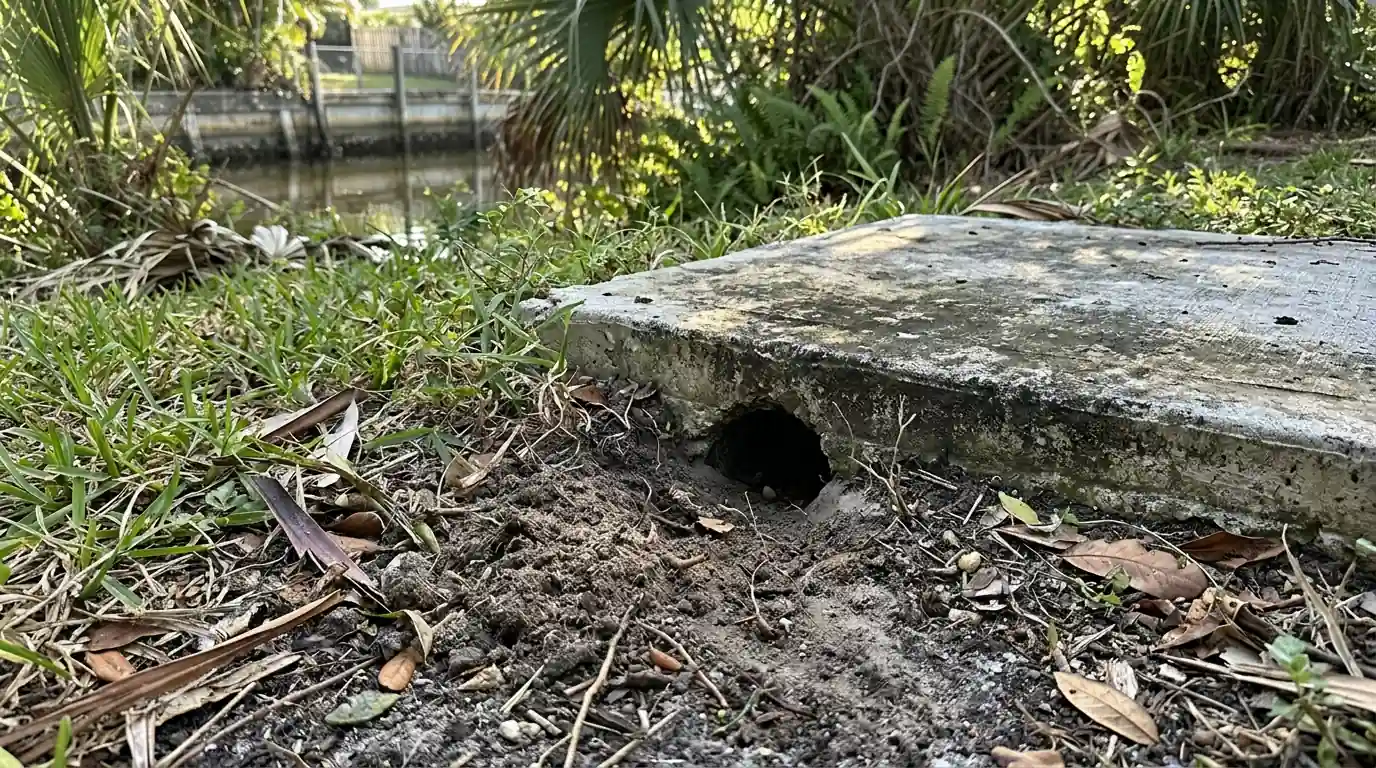
Signs you may have both
Scratching in the attic at night plus burrows along the seawall or under the shed usually means both species are present. In that case trapping and sealing happen at both levels, and exterior stations are placed along the ground routes as well as near the roofline entry points.
Why it matters for treatment
For roof rats, trapping happens in the attic and sealing happens at the roofline: soffits, vents, tile eaves and AC chases. For Norway rats, the work moves to the ground: burrow treatment, exterior stations, door sweeps, drain covers and gaps around pipes at the slab. Some properties have both, especially near canals with fruit trees in the yard.
Quick questions
Which rat is more common in Miami homes?
Roof rats are the most common in attics. Norway rats show up more near canals, sewers and commercial areas.
Do house mice look like young rats?
Mice are smaller with proportionally larger ears and feet. Young rats have large heads and feet compared with their bodies.